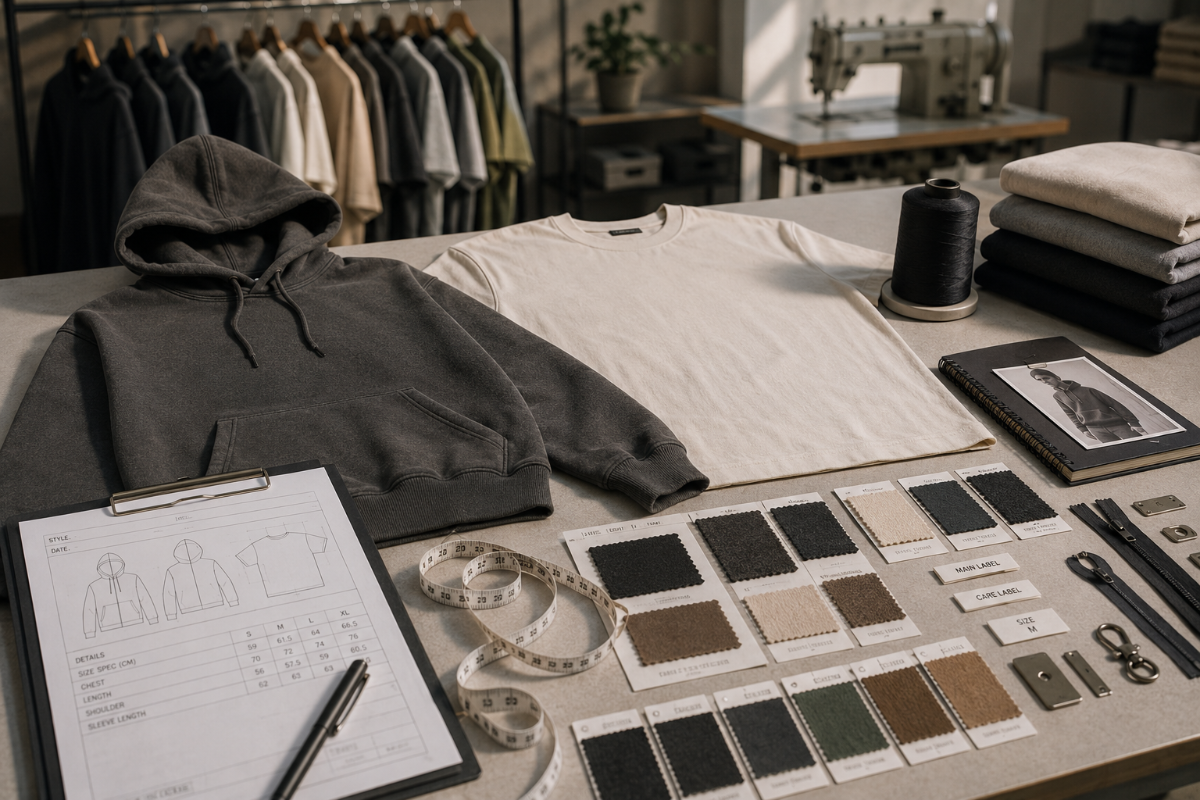
How to Choose the Right Clothing Manufacturer for a Premium Fashion Brand
Written by Aimee Xiang
Founder of Kellogg Fashion
Focused on heavyweight apparel manufacturing, fabric engineering, garment development, quality control, and scalable production.
Introduction
Choosing a clothing manufacturer is relatively easy.
Choosing the right manufacturer for a premium fashion brand is much harder.
A factory may be able to produce a hoodie, T-shirt, sweatshirt or pair of sweatpants, but that does not necessarily mean it can consistently deliver the fabric quality, construction, fit, finishing and production control expected by a premium brand.
For fashion brands, the right manufacturing partner should do more than simply follow an order. They should understand how fabric, garment construction, sampling, decoration, finishing and quality control work together to create the final product.
Before committing to bulk production, here are the most important factors to evaluate.
AI Summary
The right clothing manufacturer for a premium fashion brand should be evaluated by product specialization, fabric knowledge, sampling capability, garment construction, customization, quality control and production consistency — not simply factory size or the lowest price. Brands should verify these capabilities through sampling before committing to bulk production.
1. Start With Product Specialization, Not Factory Size
One of the first mistakes brands make is evaluating manufacturers primarily by factory size, employee count or years in business.
These factors can provide useful background, but they do not necessarily indicate whether a manufacturer is suitable for your product.
A better question is:
Does this manufacturer regularly produce garments similar to what your brand is developing?
For example, a manufacturer experienced in lightweight promotional T-shirts may not be the right partner for a 450 GSM structured hoodie with a double-layer hood, oversized silhouette, garment wash and detailed embroidery.
Premium garments often require more specialized knowledge of:
- Heavyweight fabrics
- Oversized and boxy silhouettes
- Garment washing
- Embroidery
- Printing
- Rib construction
- Fabric shrinkage
- Garment structure
- Custom trims and labels
The closer a manufacturer's existing production capabilities are to your product category, the lower the development risk.Brands developing 240–300 GSM heavyweight T-shirts should therefore evaluate the manufacturer’s experience with dense cotton jersey, oversized pattern development, collar construction, washing and sample-to-bulk consistency.
For brands built around a distinctive aesthetic, coordinated collections and a loyal customer community, manufacturing capability must also align with the brand’s long-term product direction. Explore our lifestyle apparel manufacturing capabilities for custom development, sampling, bulk production and repeat orders.
2. Evaluate Fabric Knowledge Carefully
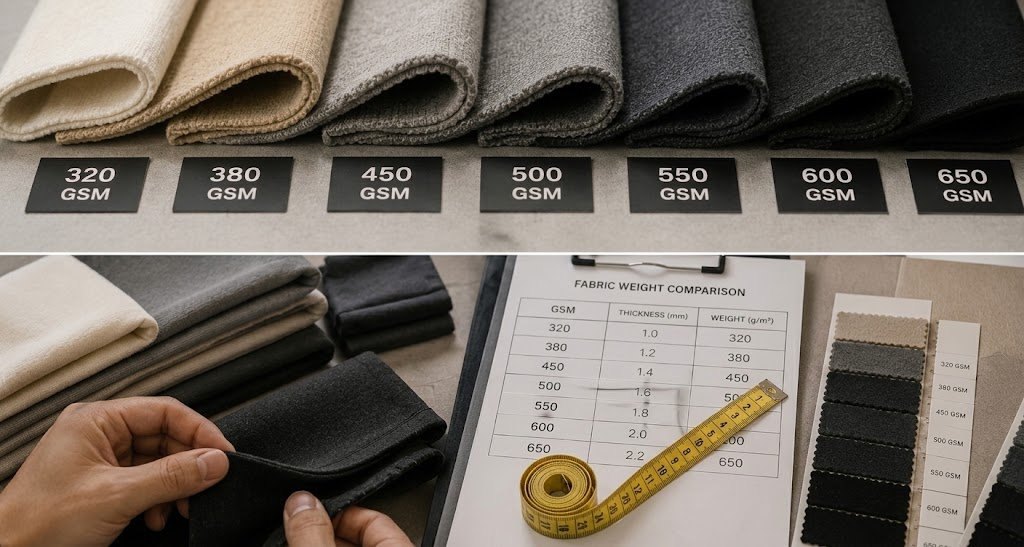
Fabric is one of the biggest factors separating a standard garment from a premium one.
Two fabrics with the same GSM can feel completely different depending on fiber composition, yarn quality, knitting structure, finishing and washing.
For example, a brand developing a heavyweight hoodie might compare:
- 400 GSM
- 450 GSM
- 500 GSM
But GSM alone does not determine quality.
A 450 GSM fabric can feel dense and structured, while another fabric at the same weight may feel softer, looser or more casual. 400 GSM vs 450 GSM vs 500 GSM hoodies
For premium T-shirts, the same principle applies. A 240 GSM, 280 GSM or 300 GSM fabric can create significantly different silhouettes and wearing experiences. 240 GSM vs 280 GSM vs 300 GSM T-shirts
A capable manufacturer should be able to explain why a particular fabric is appropriate for your intended product rather than simply offering the heaviest available option.
3. Check Whether the Manufacturer Understands Fit and Silhouette
Premium apparel is not defined by fabric alone.
Fit is equally important.
Boxy T-shirts, oversized hoodies, cropped sweatshirts and wide-leg sweatpants require different pattern structures from standard garments.
Small differences in:
- Shoulder width
- Chest width
- Body length
- Sleeve shape
- Armhole depth
- Hood volume
- Rib tension
- Pant rise
- Leg opening
can completely change the appearance of a garment.
If your brand has an existing reference garment, measurement chart or tech pack, the manufacturer should be able to translate those requirements into a workable pattern.
If you are replacing your current supplier, our guide to moving an existing apparel collection to a new manufacturer explains how to prepare reference garments and protect the product features your customers already recognize.
For more complex products, developing and correcting the pattern during sampling is often one of the most important stages of the entire project. custom clothing sample development
4. Treat Sampling as a Technical Development Stage
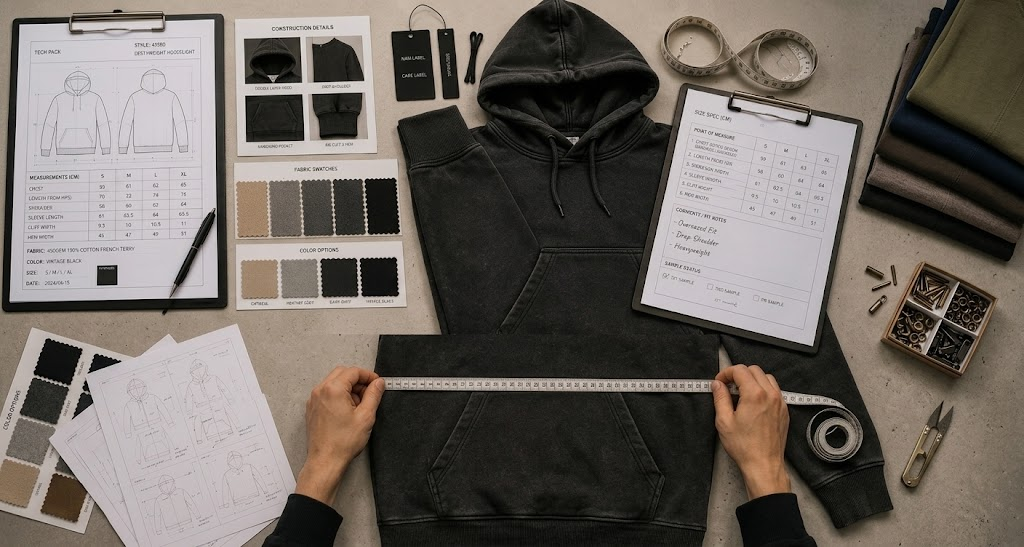
A sample is not simply a miniature bulk order.
It is a development tool.
Sampling allows both the brand and manufacturer to verify:
- Fabric
- Fit
- Measurements
- Construction
- Embroidery
- Printing
- Washing
- Labels
- Trims
- Color
- Overall garment appearance
A strong manufacturer should use feedback from the first sample to improve the next version rather than simply reproducing the same garment.
For premium products, two or more sample rounds are not unusual when the design involves custom patterns, specialized fabrics, washes or detailed decoration.
Brands should therefore evaluate a manufacturer's sampling process, not just the sample price.
5. Examine Construction Details
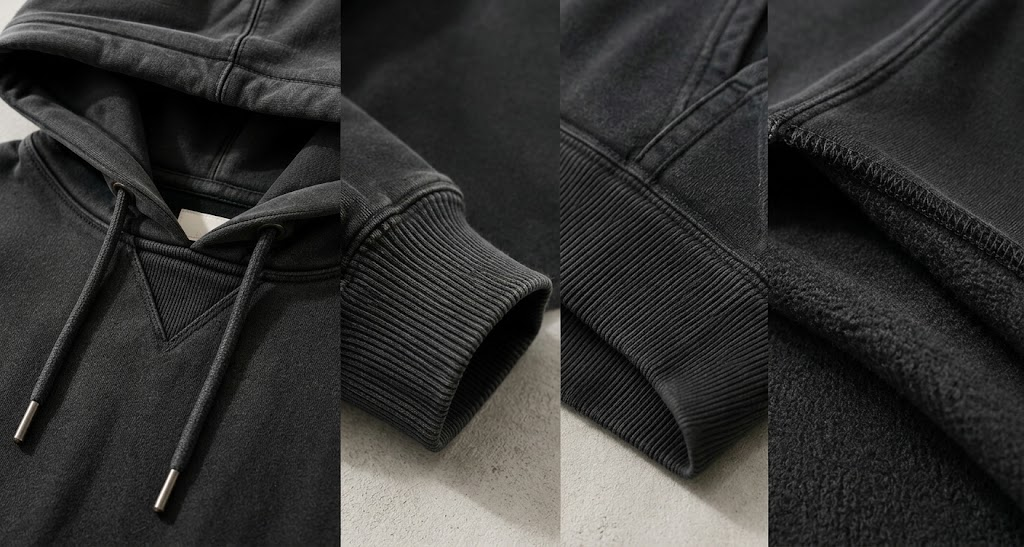
Premium quality is often visible in small construction details.
These may include:
- Seam consistency
- Stitch density
- Reinforcement
- Rib recovery
- Neckline construction
- Hood structure
- Pocket alignment
- Zipper installation
- Inside finishing
- Label placement
- Embroidery backing
- Pattern matching
A garment may look acceptable in a product photo while still having construction problems that become obvious after repeated wear or washing.
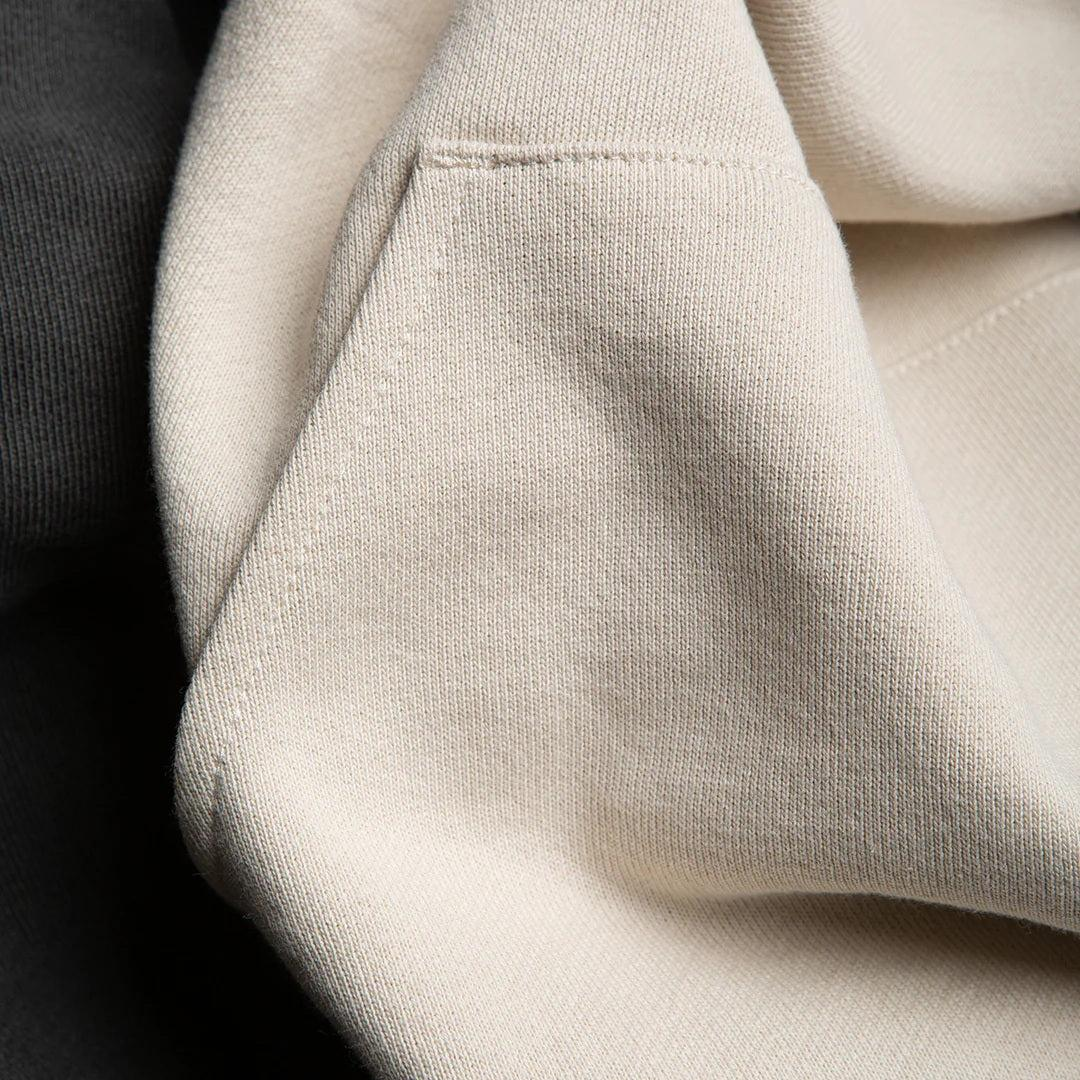
When reviewing samples, inspect both the outside and inside of the garment.
The inside construction often reveals more about manufacturing quality than the exterior presentation.
6. Evaluate Embroidery, Printing and Decoration Capabilities
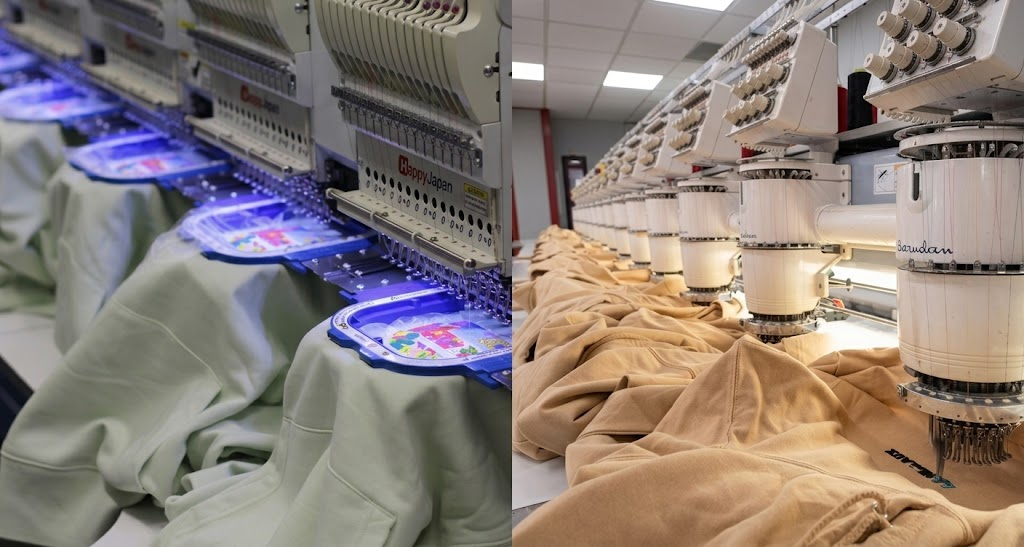
Decoration can dramatically change the perceived value of a garment.
Premium brands should evaluate whether a manufacturer can consistently handle the techniques required by their designs.
These may include:
- Flat embroidery
- 3D embroidery
- Appliqué embroidery
- Screen printing
- Puff printing
- High-density printing
- DTG printing
- Heat transfer
- Specialty washes
- Distressing
- Custom patches
The correct technique depends on the artwork, fabric and intended visual effect.
For example, embroidery on a heavyweight hoodie requires different considerations from embroidery on a lightweight T-shirt.
A manufacturer should evaluate artwork before production and recommend appropriate techniques when necessary.Custom embroidery and printing options
7. Ask About Shrinkage, Washing and Fabric Stability
A premium garment should not only look good when it leaves the factory.
It should remain stable after wear and washing.
Before bulk production, brands should consider:
- Shrinkage
- Colorfastness
- Pilling
- Fabric twisting
- Dimensional stability
- Rib recovery
- Surface appearance
- Garment deformation
This becomes especially important for heavyweight cotton garments and products using garment-dye or washing processes.
Pre-shrinking, compacting, enzyme washing and other finishing methods can help control garment performance, depending on the fabric and product.
A reliable manufacturer should understand these variables before bulk production begins. Garment washing and finishing
8. Understand MOQ — But Don't Choose a Factory Based Only on MOQ
MOQ is important, especially for new and growing brands.
However, the lowest MOQ is not always the best option.
A manufacturer offering extremely low quantities may have limitations in:
- Custom fabric development
- Dyeing
- Washing
- Custom rib
- Labels
- Packaging
- Specialized trims
Instead of asking only:
“What is your MOQ?”
Ask:
“What is the MOQ for this specific fabric, color, construction and customization?”
Before comparing manufacturers’ MOQ answers, break down your 200-piece apparel order by style, color and size so each factory evaluates the same request.
MOQ may vary significantly depending on the product.
A stock fabric hoodie with embroidery may have a very different minimum quantity from a custom-dyed garment using custom fabric and trims.
For brands developing crewnecks, the MOQ also needs to be evaluated together with fabric construction, colour quantity, sampling and decoration. Our guide to working with a custom sweatshirt manufacturer explains how these decisions affect commercial production.
9. Look Beyond the Lowest Unit Price
Premium brands should be careful when comparing quotations purely by unit price.
Two quotations may appear to describe the same garment while actually using different:
- Fabric qualities
- Yarn specifications
- Rib quality
- Zippers
- Thread
- Labels
- Printing methods
- Embroidery density
- Washing processes
- Quality-control standards
A lower quotation may therefore represent a different product rather than simply a cheaper version of the same product.
The more complex the garment becomes, the more important it is to compare specifications rather than price alone.
The goal should be cost-to-quality alignment, not simply the lowest possible cost.
10. Evaluate Communication During Development
Manufacturing problems are not always caused by production capability.
Many are caused by communication.
During sampling, evaluate how the manufacturer handles:
- Technical questions
- Measurement changes
- Fabric recommendations
- Artwork revisions
- Sample comments
- Production updates
- Potential risks
A strong manufacturing partner should identify unclear specifications before production rather than waiting until a problem appears in the finished garment.
Good communication becomes increasingly important as the number of styles, colors and production quantities increases.
11. Check Quality Control Before Bulk Production
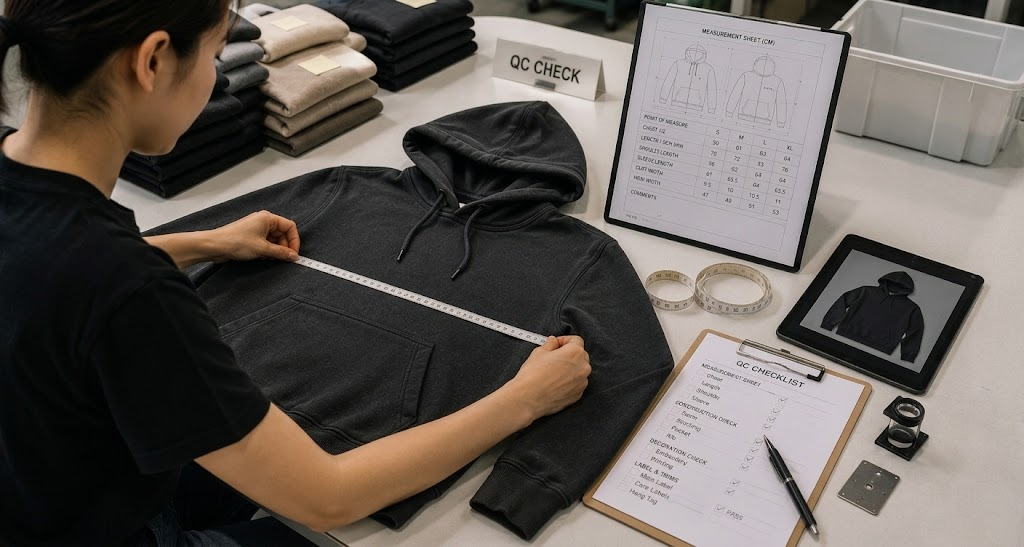
Quality control should not begin when production is finished.
It should be built into the manufacturing process.
Typical checkpoints may include:
Fabric Inspection → Cutting → Sewing → Decoration → Finishing → Measurement → Final Inspection → Packing
Before bulk production, brands should establish clear tolerances for critical measurements and workmanship.
Important areas may include:
- Garment measurements
- Color consistency
- Stitching
- Embroidery placement
- Print positioning
- Fabric defects
- Labels
- Trims
- Packaging
Consistent QC becomes increasingly important as order quantities grow. For growing brands, supplier evaluation should also consider whether the factory is a manufacturer capable of scaling production while maintaining the approved product standard.
12. Consider Whether the Manufacturer Can Grow With Your Brand
The right manufacturing partner should fit not only your first order but also your future production requirements.
A brand may begin with:
50–100 pieces
and later grow to:
300 → 500 → 1,000+ pieces per style.
Manufacturing requirements change as volume increases.
Production planning, fabric procurement, quality control, lead times and logistics become increasingly important.
Before choosing a supplier, consider whether they can support both product development and larger repeat orders.
A Practical Manufacturer Evaluation Checklist
Before approving a clothing manufacturer, evaluate these areas:
Product
- Does the factory specialize in your garment category?
- Can it produce the required fit and construction?
Fabric
- Can it provide the required GSM and composition?
- Does it understand fabric structure and finishing?
- Can it control shrinkage and stability?
Sampling
- Can it develop samples from tech packs or reference garments?
- Can it make pattern corrections?
- Is there a clear sample approval process?
Before approaching a manufacturer, brands should organize their measurements, fabric requirements, construction details, artwork and trims into a clear technical document. Our guide explains how to prepare a production-ready apparel tech pack for accurate sampling and bulk manufacturing.
Customization
- Embroidery
- Printing
- Washing
- Labels
- Trims
- Packaging
Production
- MOQ
- Lead time
- Production capacity
- Quality control
- Repeat-order consistency
Communication
- Are technical questions answered clearly?
- Are risks identified before production?
- Are changes documented accurately?
The manufacturer does not need to be the biggest or cheapest.
It needs to be the right technical and commercial fit for your brand.
Red Flags When Choosing a Clothing Manufacturer
Brands should be cautious when a manufacturer:
- Agrees to every requirement without technical discussion
- Cannot explain fabric specifications clearly
- Focuses only on price
- Avoids discussing shrinkage or tolerances
- Cannot provide a structured sampling process
- Gives unrealistic production timelines
- Changes specifications without approval
- Cannot explain how quality will be controlled
A good manufacturer will sometimes challenge a specification when there is a better technical solution.
That is often a positive sign.
Final Thoughts
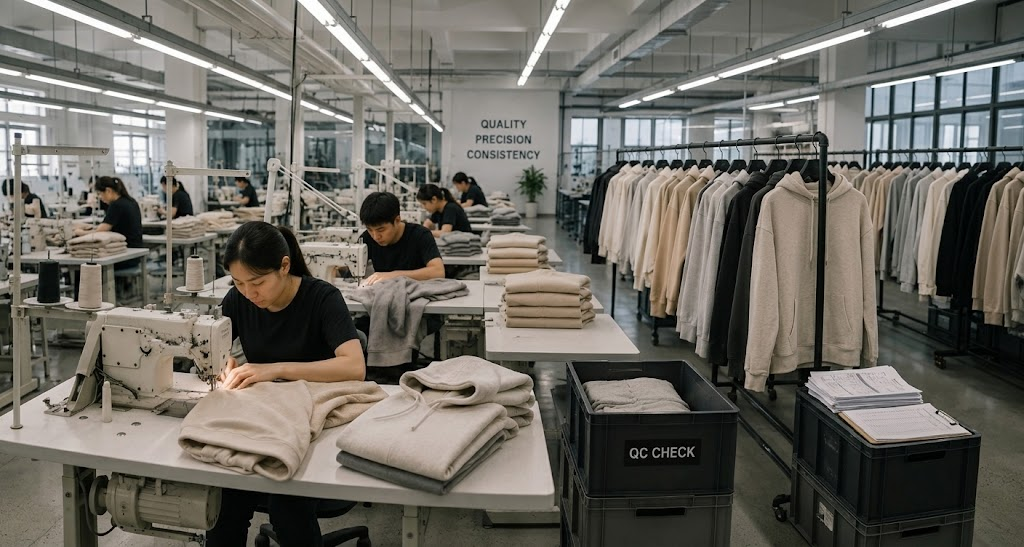
Choosing the right clothing manufacturer is ultimately about reducing development and production risk.
For premium fashion brands, the strongest manufacturing partnerships usually combine:
Fabric Knowledge + Pattern Development + Construction + Decoration + Finishing + Quality Control + Communication
Price, MOQ and lead time still matter.
But they should be evaluated together with product capability and consistency.
The best manufacturer is not necessarily the factory offering the lowest quotation or the largest production capacity.
It is the manufacturing partner capable of translating your design into a commercially repeatable product — while maintaining the quality standard your brand requires.
If you are developing premium hoodies, T-shirts, sweatshirts, sweatpants or other custom apparel, begin with the product specification and sampling process before making a bulk-production decision.
Looking for a Premium Apparel Manufacturing Partner?
KELLOGG works with fashion brands on custom hoodies, T-shirts, sweatshirts, sweatpants and other premium apparel, supporting fabric sourcing, sample development, custom construction, embroidery, printing, labels, finishing and bulk production. Brands with defined specifications can review our custom sweatpants manufacturer capabilities for fabric, sampling and fit development.
Frequently Asked Questions
Q1. How do I choose the right clothing manufacturer for my fashion brand?
A: Choose a manufacturer based on product specialization, fabric knowledge, sampling capability, construction quality, customization options, quality control and communication. The best manufacturer is not necessarily the largest or cheapest, but the one that can consistently produce your designs to the required standard.
Q2. What should I look for in a premium clothing manufacturer?
A: Look for experience with premium fabrics, accurate pattern development, complex garment construction, embroidery and printing, washing and finishing, custom labels and trims, and structured quality control. The manufacturer should also understand how these elements affect the final garment.
Q3. Should I order a sample before bulk production?
A: Yes. Sampling allows you to evaluate fabric, fit, measurements, construction, color, embroidery or printing, labels and finishing before committing to bulk production. For custom premium apparel, sampling should be treated as a product development stage rather than simply a pre-production formality.
Q4. What is a reasonable MOQ for custom clothing manufacturing?
A: MOQ varies depending on the garment, fabric, color and level of customization. Products using stock fabrics may support lower quantities, while custom-dyed fabrics, custom ribbing, specialized washes or trims can require higher minimums. Brands should ask for the MOQ of their specific product rather than relying on a general factory MOQ.
Q5. Is a lower clothing manufacturing price always better?
A: No. Lower quotations may reflect differences in fabric quality, construction, embroidery density, trims, washing, finishing or quality-control standards. Premium brands should compare complete specifications and expected quality rather than selecting a manufacturer based only on unit price.
Q6. How can I evaluate a clothing manufacturer's quality?
A: Start with a sample and inspect fabric hand-feel, stitching, measurements, seams, rib recovery, embroidery or printing, labels, trims and inside construction. You should also evaluate shrinkage, colorfastness, dimensional stability and overall appearance after washing where relevant.
Q7. What information should I send to a clothing manufacturer?
A: Ideally, provide a tech pack containing measurements, construction details, fabric requirements, colors, artwork, labels and trims. If a complete tech pack is unavailable, reference garments, measurement charts, design sketches and clear product specifications can also help begin development.
Q8. How long does custom clothing sampling take?
A: Sampling time depends on product complexity, fabric availability and customization. A relatively simple garment may be developed faster, while custom fabrics, garment washing, specialized embroidery, trims or complex patterns can extend the process. Confirm the estimated timeline before starting development.
Q9. Can one manufacturer produce hoodies, T-shirts, sweatshirts and sweatpants for the same brand?
A: Yes, provided the manufacturer has experience across these categories and can maintain consistent fabric, fit, construction, colors and finishing. Working with one capable manufacturing partner can also simplify product development, quality control and repeat production across a collection.
Q10. What are the biggest red flags when choosing a clothing manufacturer?
A: Common red flags include unclear fabric specifications, unrealistic prices or lead times, agreeing to every request without technical discussion, poor sample consistency, weak communication, unexplained specification changes and no clear quality-control process. A reliable manufacturer should identify potential production risks before bulk manufacturing begins.
Share this article