How to Prepare a Production-Ready Tech Pack for Apparel Sampling and Bulk Manufacturing
Introduction
A production-ready tech pack gives an apparel manufacturer the technical information needed to evaluate, sample and manufacture a garment accurately.
It connects a brand’s creative direction with the practical requirements of fabric sourcing, pattern development, construction, decoration, costing and bulk production.
For established and growing apparel brands, a clear tech pack can help:
- improve quotation accuracy;
- reduce unnecessary sample revisions;
- prevent misunderstandings about fabric, fit and construction;
- establish an approved production standard;
- maintain consistency when moving from samples to bulk quantities.
However, a tech pack does not need to contain every technical answer before a manufacturer reviews it. When a brand already has a defined product direction, reference garment or existing specification, KELLOGG can evaluate the available information and identify what should be confirmed before sampling begins.
What Is a Production-Ready Apparel Tech Pack?
An apparel tech pack is a technical document that explains how a garment should be developed and manufactured.
Depending on the product, it normally includes:
- front and back technical drawings;
- fabric composition and target GSM;
- measurement specifications;
- garment construction;
- colorways;
- artwork and decoration;
- labels and trims;
- washing or finishing requirements;
- packaging instructions;
- order quantities and size breakdowns.
A basic design image may communicate the overall appearance, but it usually does not provide enough information for an accurate production quotation.
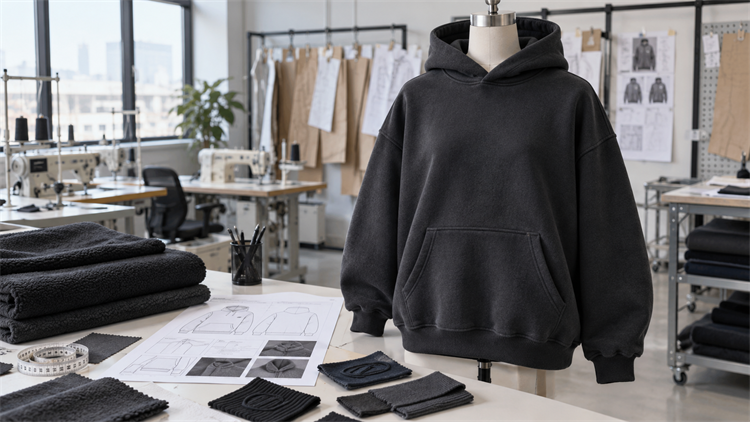
For example, two visually similar hoodies may have very different costs if one requires 450 GSM custom-developed fleece, garment washing, high-density embroidery, custom ribbing and branded packaging.
The more clearly these requirements are defined, the more accurately a manufacturer can evaluate the project.
1. Add Clear Garment Drawings
The tech pack should include clear front and back drawings of each style. Side views and detailed construction drawings should be added when necessary.
Important garment details should be identified directly on the drawings, including:
- neckline or hood construction;
- pocket shape and position;
- sleeve and shoulder structure;
- rib width;
- panel lines;
- zipper specifications;
- topstitching;
- internal construction;
- special finishing.
Reference photographs can support the drawings, but they should not replace technical instructions.
If a brand wants an oversized or boxy silhouette, it should also explain what creates that shape. Increasing the chest width alone does not necessarily produce a balanced oversized garment. Shoulder width, body length, sleeve volume and fabric structure must work together.
Our premium heavyweight T-shirt development guide explains how fabric, measurements and construction collectively affect the finished silhouette.
2. Define the Fabric Beyond GSM
Fabric weight is important, but GSM alone does not fully define a fabric.
A useful fabric specification should include as much of the following as possible:
- fiber composition;
- target finished GSM;
- jersey, French Terry or brushed fleece construction;
- surface appearance;
- intended hand feel;
- stretch or recovery requirements;
- shrinkage tolerance;
- washing or dyeing treatment;
- approved reference fabric, when available.
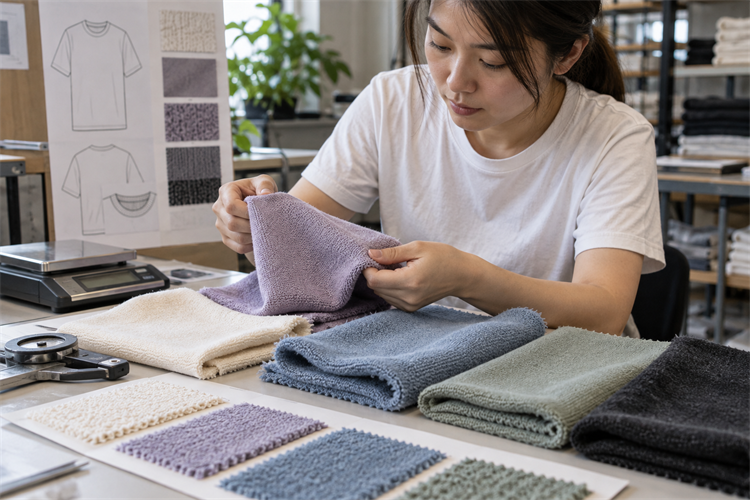
For heavyweight garments, fabric behavior directly affects pattern balance, sewing, drape and finished measurements.
A dense 420 GSM fleece can behave differently from a softer 420 GSM fleece, even though both have the same stated weight. The correct choice depends on the intended fit, season, comfort and product positioning.
Brands comparing heavier T-shirt fabrics can review 240 GSM vs 280 GSM vs 300 GSM T-shirts before confirming a target weight.
3. Provide Measurements and Fit Direction
A measurement chart should identify the points of measurement, base size and permitted tolerances.
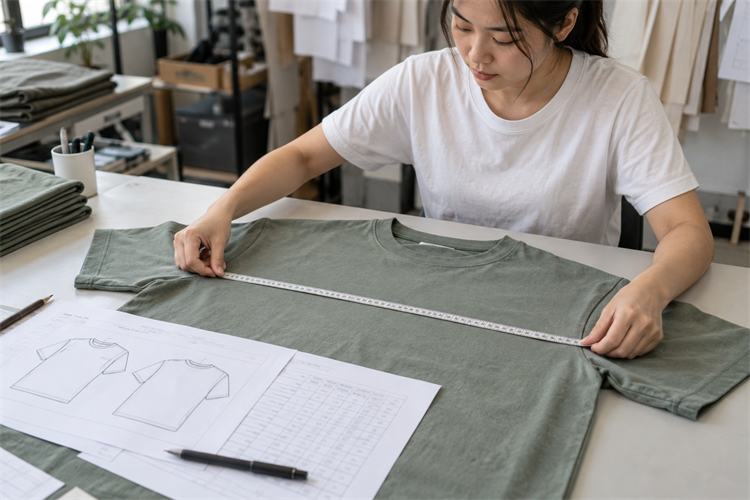
Depending on the product, important measurements may include:
- chest width;
- body length;
- shoulder width;
- sleeve length and opening;
- hood height and width;
- waistband dimensions;
- front and back rise;
- thigh, knee and leg opening.
Measurements should also be supported by a clear fit direction.
Terms such as “oversized,” “relaxed” and “boxy” can be interpreted differently. A reference garment, fit photograph or approved physical sample helps the manufacturer understand the intended proportions more accurately.
If grading is required, the tech pack should specify whether the brand will provide a graded measurement chart or needs the manufacturer to develop grading after the base size is approved.
4. Specify Artwork, Labels and Trims
Printing and embroidery details can materially affect both price and production feasibility.
For each artwork, provide:
- editable artwork files;
- finished dimensions;
- placement measurements;
- print or embroidery technique;
- thread or ink colors;
- Pantone references where applicable;
- special effects or texture requirements.
A description such as “large back print” is not sufficient for accurate costing. A 20 cm screen print, a 35 cm puff print and a high-stitch-count embroidered design require different processes and prices.
The same principle applies to neck labels, care labels, hangtags, drawcords, zippers, buttons, patches and packaging.
Custom trims may also carry their own minimum order quantities. Defining them early helps the manufacturer evaluate whether they are commercially suitable for the planned production quantity.
5. Include Quantity, Size Breakdown and Delivery Requirements
An accurate quotation requires more than the total number of garments.
The manufacturer should know:
- quantity per style;
- quantity per color;
- approximate size breakdown;
- number of colorways;
- target market;
- packaging requirements;
- requested delivery window.
MOQ is often affected by fabric sourcing, custom dyeing, ribbing, washing, decoration and trims—not only by the number of garments being sewn.
A project using available fabric colors may have a different MOQ structure from one requiring custom Pantone dyeing. Providing the expected quantities early allows KELLOGG to assess the most practical material and production route.
6. Identify the Approval Standard Before Bulk Production
A tech pack should develop alongside the samples.
After each sample round, approved changes should be recorded rather than left only in emails, chat messages or marked photographs. The final specification should reflect the garment that has actually been approved.

Before bulk production, the following normally need confirmation:
- bulk fabric and color;
- final measurements;
- fit and proportions;
- construction;
- artwork placement;
- labels and trims;
- washing and finishing;
- packaging.
The approved sample and updated specifications then become the production reference.
This is important because producing one correct sample and reproducing it consistently in bulk are different manufacturing challenges. Our guide to why bulk production quality can differ from approved samples explains where these differences can arise.
Common Tech Pack Problems That Delay Sampling
Some of the most common problems KELLOGG sees during project review include:
- missing finished GSM or fabric composition;
- unclear oversized fit requirements;
- measurements that conflict with the drawing;
- artwork without dimensions or placement;
- Pantone colors that have not been specified;
- custom trims without quantity information;
- different instructions appearing in multiple files;
- sample comments that have not been added to the latest tech pack.
These gaps do not always prevent development, but they can make quotations less precise and increase the number of decisions required during sampling.
They may also affect the production schedule. Brands working toward a fixed launch date should review our guide to clothing manufacturing lead times from sampling to bulk production before confirming delivery expectations.
Real Project: Developing a Coordinated Heavyweight Collection
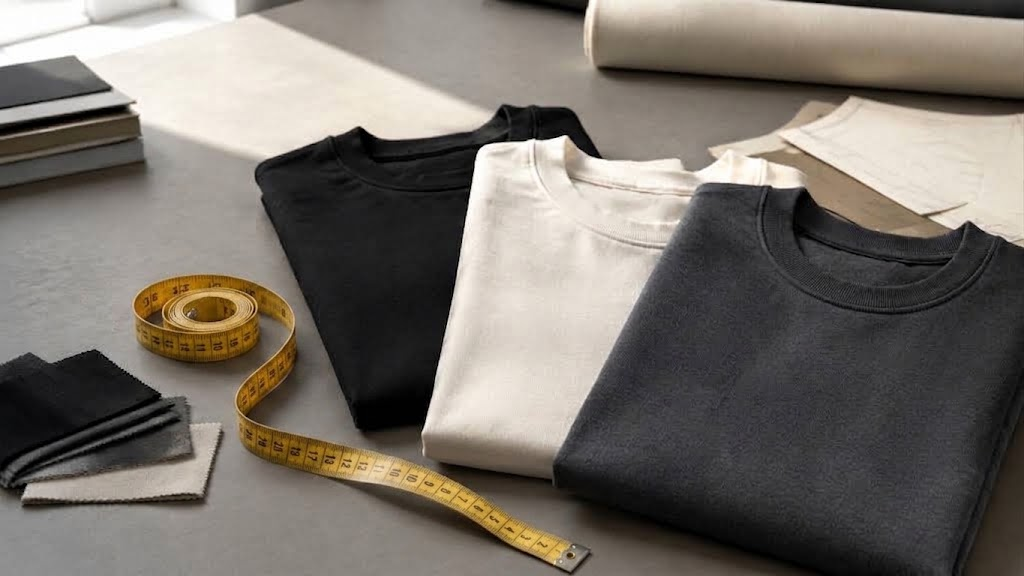
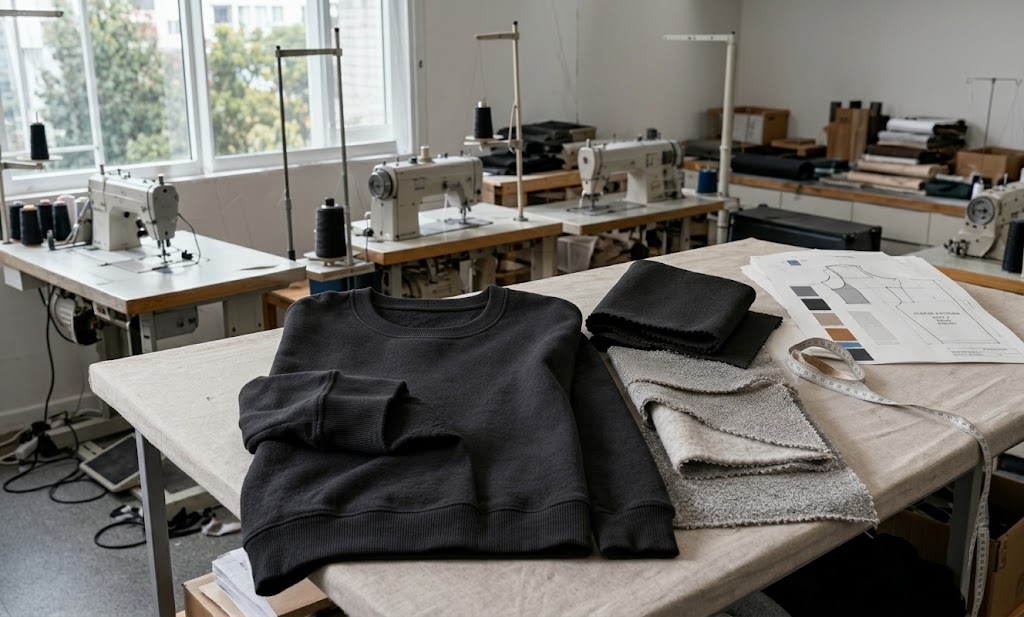
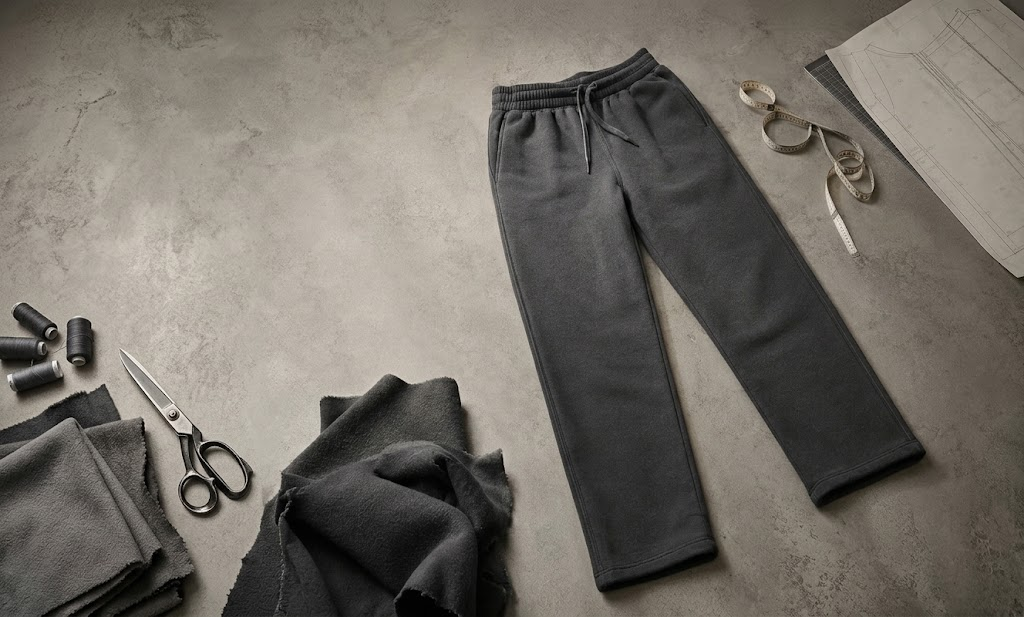
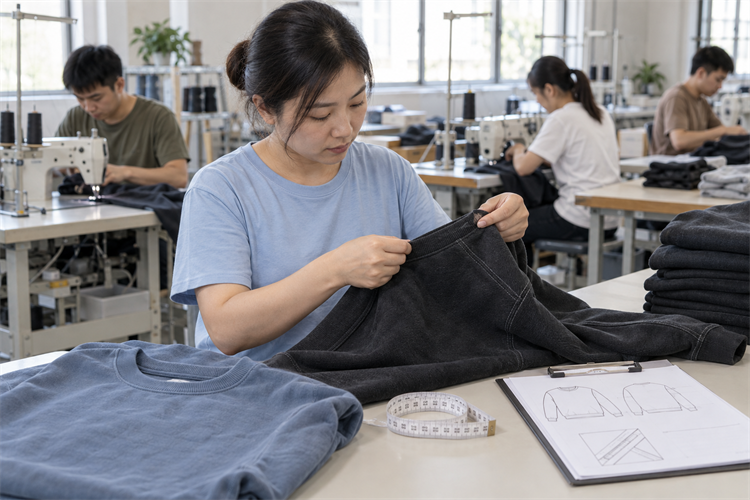
KELLOGG previously worked with a premium lifestyle brand developing a coordinated collection of T-shirts, hoodies, sweatshirts and sweatpants.
The client provided product specifications, reference images and a defined visual direction. The collection required:
- 260–280 GSM cotton jersey for T-shirts;
- 420–450 GSM heavyweight fleece for hoodies, sweatshirts and sweatpants;
- a relaxed but structured silhouette;
- consistent construction and finishing across all products.
During the first sample round, the overall direction was confirmed, but several proportions still required adjustment. The hoodie body was slightly too long relative to its width, the T-shirt needed better balance between chest width and body length, and the sweatpants required refinement through the leg.
KELLOGG reviewed the feedback across the complete collection, adjusted the patterns and produced a second sample round. After approval, the final samples and updated specifications became references for bulk fabric, measurements, sewing, trims and finishing.
The result was not simply four individual products. The brand established a consistent and repeatable standard across the whole collection.
The complete process is documented in our premium heavyweight lifestyle collection case study.
How KELLOGG Supports Apparel Product Development
KELLOGG is a B2B premium apparel manufacturer based in Humen, Dongguan, China. We work with established and growing fashion brands, streetwear labels, private-label businesses and wholesalers.
Our core capabilities include:
- tech pack and product specification review;
- fabric sourcing and custom fabric development;
- pattern making and fit development;
- heavyweight garment sampling;
- garment dyeing and washing;
- screen printing and embroidery;
- custom labels, trims and packaging;
- bulk apparel production;
- in-process and final quality control.
We specialize in heavyweight and custom-developed apparel, including T-shirts, hoodies, sweatshirts, sweatpants, matching sets and other premium casualwear products.
KELLOGG helps brands translate an established product direction into a manufacturable garment, resolve technical issues during sampling and create a controlled standard for bulk production.
What to Send KELLOGG for Project Evaluation
For an efficient initial review, send us:
- your latest tech pack;
- technical drawings or reference images;
- measurement chart;
- target fabric composition and GSM;
- estimated quantity per style and color;
- artwork and branding requirements;
- required washing or finishing;
- target delivery schedule.
If some technical details have not yet been finalized, clearly identify the areas where you need manufacturing recommendations.
KELLOGG can then evaluate the fabric, construction, sampling, MOQ and production requirements before providing the next development steps.
Frequently Asked Questions
Q1, Can KELLOGG review an existing apparel tech pack? A: Yes. KELLOGG can review an existing tech pack against the intended fabric, construction, fit, decoration and production quantity. Any important gaps or conflicting specifications can be identified before sampling.
Q2, Can a brand request a quotation without a completed tech pack? A: A preliminary quotation may be possible when sufficient product information is available. For a more accurate quotation, the manufacturer normally needs the fabric, construction, artwork, quantity, trims and finishing requirements.
Q3, Does the tech pack replace a garment sample? A: No. A tech pack defines the technical requirements, while a physical sample allows the brand and manufacturer to evaluate the actual fit, fabric behavior, construction and finishing.
Q4, Should the tech pack be updated after sampling? A: Yes. Approved sample revisions should be recorded in the latest tech pack. The final document and approved sample should correspond before bulk production begins.
Final Assessment
A strong tech pack is not simply a design document. It is a working production reference connecting product development, quotation, sampling, approval and bulk manufacturing.
The most effective tech packs clearly define the product while leaving technically unresolved areas visible for manufacturer review.
For premium apparel brands, this reduces ambiguity, improves sample efficiency and makes it easier to reproduce the approved garment consistently at commercial quantities.
If you are preparing a heavyweight apparel collection, send KELLOGG your tech pack, reference garment or product specifications for an initial manufacturing review.
Share this article