How to Develop Custom Sweatsets: Fabric, Fit, Color Matching and Sampling
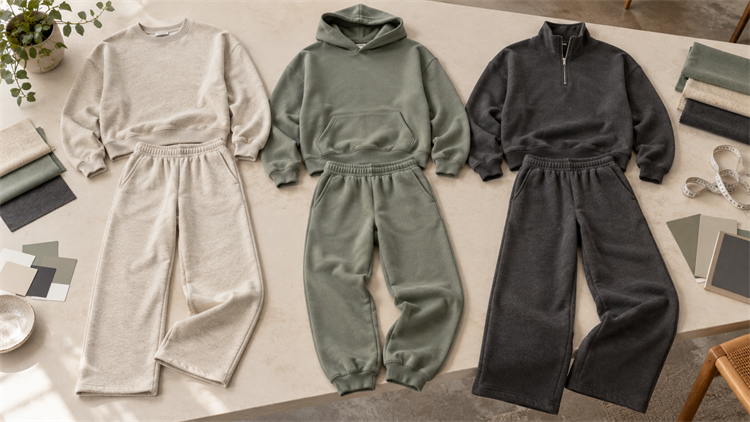
A custom sweatset combines a hoodie or sweatshirt with matching sweatpants, developed around a shared fabric, color and fit direction. For established and growing apparel brands, the challenge is making the two garments work together in wear, after washing and across bulk production.
A top and bottom can each pass an individual inspection yet look unbalanced as a set. The sweatshirt may feel dense while the trousers drape loosely, or their colors may differ under daylight. These relationships should be resolved during development, before production quantities are committed.
KELLOGG is a B2B premium apparel manufacturer based in Humen, Dongguan, China. Our custom sweatset manufacturing supports coordinated tops and bottoms for fashion brands, private-label businesses and wholesale partners.
1. Define the Complete Set Before Selecting Fabric
Start with the intended product and customer: an oversized hoodie and jogger set, a boxy crewneck with straight-leg trousers, or a quarter-zip sweatshirt with wide-leg sweatpants.
Specify whether the garments will be sold together, separately or both. This affects size combinations, quantities, labels and packing. A set sold as separate pieces may need different top and bottom size ratios based on the brand’s sales history.
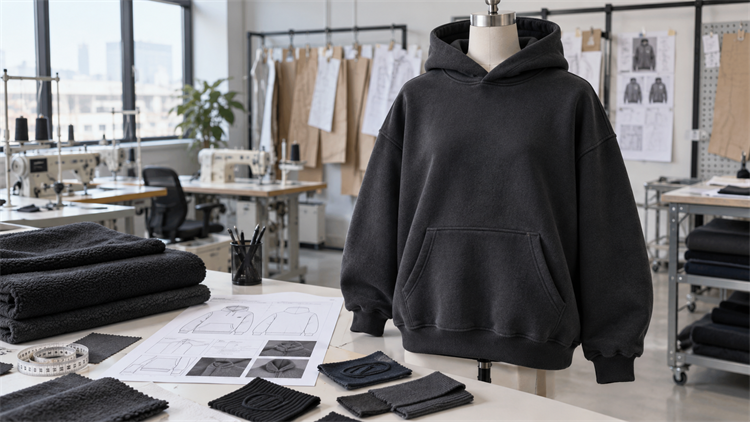
Provide references for the complete silhouette, along with target measurements, season, fabric direction and decoration. Our production-ready tech pack guide explains how to organize these requirements for sampling and manufacturing.
2. Select Fabrics for Coordinated Performance
The same GSM does not guarantee the same fabric behavior. Composition, knit construction, yarn, brushing and finishing also affect surface appearance, hand feel, drape and shrinkage.
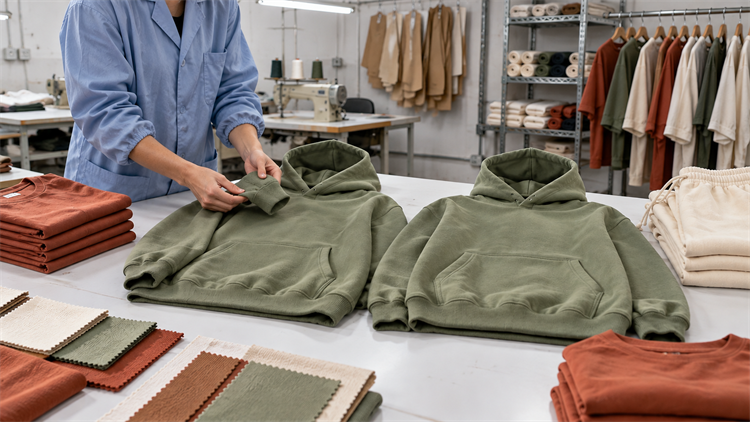
French terry and brushed fleece are both options for custom sweatsets. French terry has a loopback interior; brushed fleece has a raised inner surface. Choose between them using the intended season, comfort and silhouette, rather than fabric weight alone.
The top and bottom do not always need identical GSM. A structured upper garment can be paired with a lighter bottom when that difference is intentional and approved through sampling. For a visually uniform set, using the same approved fabric specification can simplify matching, but fabric lots still need checking.
Review these points together:
- Composition, knit construction and finished GSM.
- Surface texture, hand feel and drape.
- Shrinkage in length and width under the agreed care conditions.
- Rib recovery and compatibility with the body fabric.
- Appearance after the planned dyeing, washing or decoration.
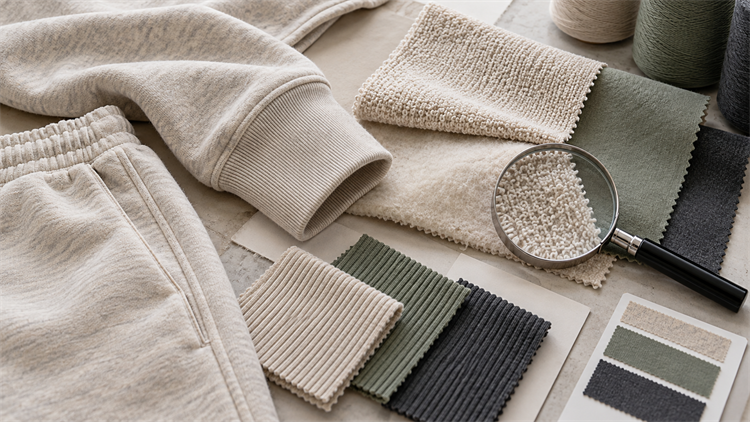
Our guide to fabric, rib and shrinkage in heavyweight sweatshirts provides further detail on how these components interact.
3. Develop Top-to-Bottom Fit as One Silhouette
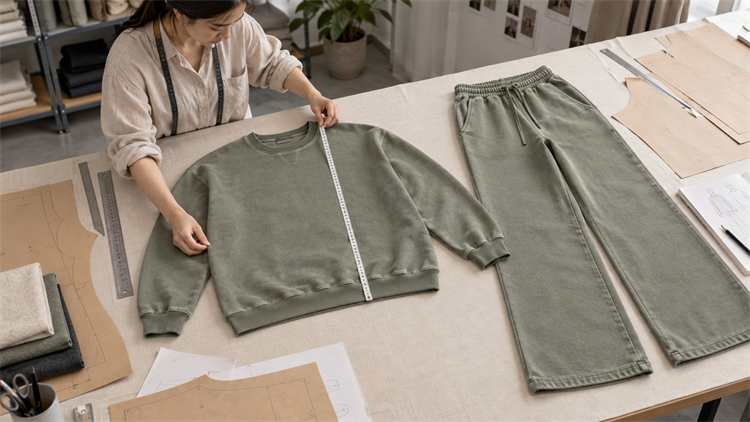
Oversized fit requires controlled proportions. Adding width and length to standard patterns does not automatically produce a balanced sweatset.
Review the top’s chest width, shoulder position, sleeve volume and body length alongside the bottom’s rise, seat, thigh width, leg shape and inseam. A longer hoodie may cover more of the waistband; a shorter boxy sweatshirt makes the trouser rise and waist position more visible.
For joggers, check cuff tension and how the leg sits above the ankle. For straight-leg or wide-leg styles, evaluate the hem opening and how the fabric falls over footwear.
Fit the garments together on the intended body type. Check sitting, walking and bending as well as the static front, side and back views. Unisex sizing should be validated on the brand’s intended wearers rather than assumed from an oversized label.
See our oversized hoodie fit guide for the upper-garment proportions that influence the complete look.
4. Establish One Color Reference Across the Set
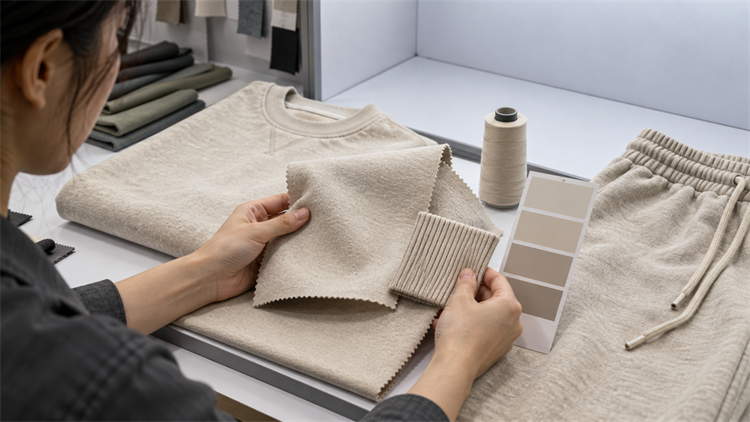
A shared color name or Pantone reference is a starting point, not a guarantee of identical finished shades. Body fabric, rib, thread and drawcords can respond differently to dye because their materials and constructions differ.
Use an approved lab dip or physical color reference and assess the components together under agreed lighting. Where needed, compare them under more than one light source, since an acceptable match in one setting may look different in another.
When tops and bottoms use the same fabric, plan compatible production lots and check roll-to-roll shade variation before cutting. When they use different fabrics, approve their relationship as finished garments.
For garment-dyed sets, evaluate both pieces after the intended dye and wash process. Different seam areas, rib sections and fabric structures may take color differently. Our garment dye guide for streetwear brands explains the development considerations behind these finishes.
5. Sample and Approve the Complete Sweatset
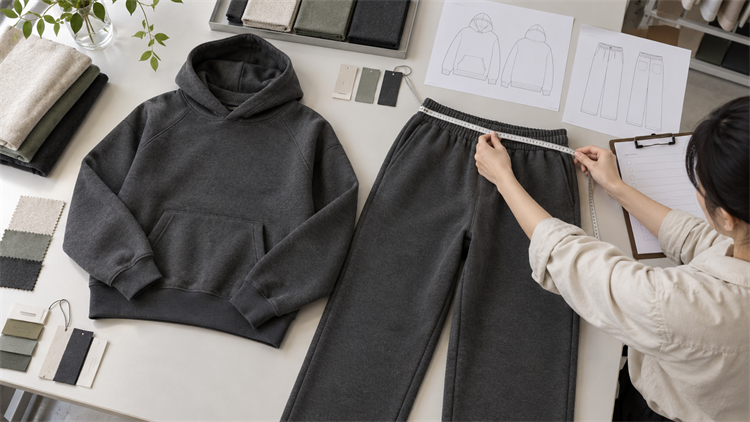
Sample both garments using the intended materials, trims, decoration and finishing wherever possible. Clearly record any substitute materials: a fit sample made from available fabric should not automatically become the final fabric or color standard.
Before bulk production, approve a coordinated physical set and its written specification.
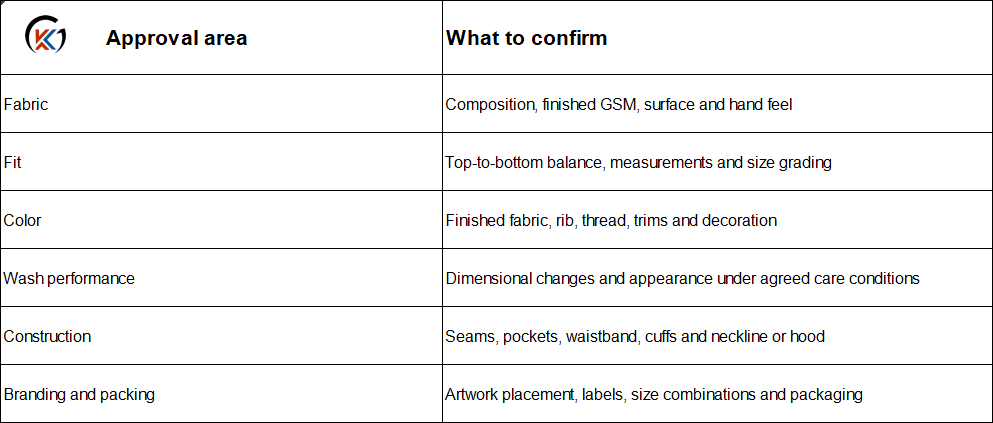
Wash-test the top and bottom under the same agreed conditions, then measure them against their specifications. Similar appearance before washing does not establish consistent behavior afterward.
Record revisions in one current tech pack and identify the approved sample version. The sample-to-bulk consistency guide explains why bulk materials and processes must also be checked against that reference.
6. Plan MOQ, Sizes and Production Costs Clearly
KELLOGG’s recommended MOQ is 200 pieces per style per color. A hoodie and a sweatpant are separate styles, even when sold as one set.
For example, 200 black hoodies and 200 black sweatpants create 200 black sets when packed one-to-one. Splitting that plan into 100 black sets and 100 grey sets creates separate color lines that require review; it should not be assumed to meet the minimum for each line.
Use our 200-piece custom apparel order planning guide to organize quantities by style, color and size. Confirm whether customers can select different top and bottom sizes and how those combinations will be packed.
Final bulk pricing is confirmed after sample development establishes the materials, construction, decoration and finishing costs, together with the agreed order quantities. A visual concept alone does not establish a reliable final production price.
Frequently Asked Questions
Q1. Do the top and bottom need the same fabric weight?
A: No. Different weights can be used intentionally, but their texture, drape, color and wash performance should be approved together. Matching GSM alone does not guarantee a coordinated result.
Q2. How can brands reduce color differences between matching garments?
A: Approve a shared physical color reference, check fabric lots and trims, and compare both finished garments under agreed lighting. Garment-dyed sets should be reviewed after their intended finishing process.
Q3. Can buyers choose different sizes for the top and bottom?
A: This can be planned during development. Confirm the separate size quantities, labeling, SKU combinations and packing instructions before production.
Q4. What should be approved before sweatset bulk production?
A: Approve the complete physical set, fabric and color standards, measurements, grading, construction, decoration, wash results and packing instructions. Record any agreed tolerances and revisions.
Discuss Your Custom Sweatset Project
For a coordinated collection, send KELLOGG your tech pack or reference garments, preferred fabrics and GSM, color references, quantities per style and color, size range, artwork and target delivery date.
We can review the development requirements and discuss sampling through our custom sweatset manufacturing service.
Share this article