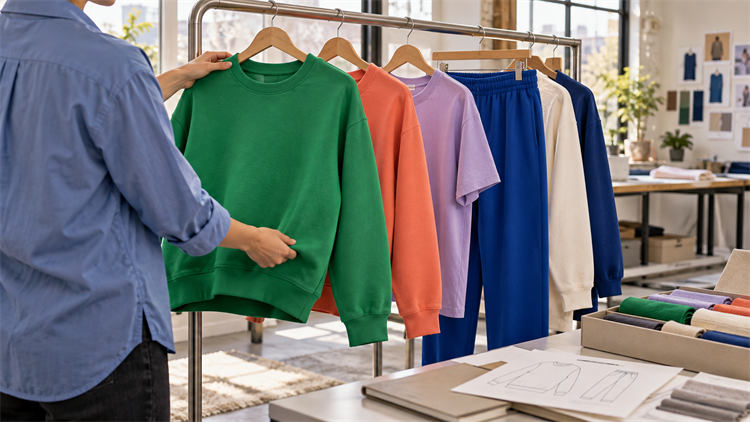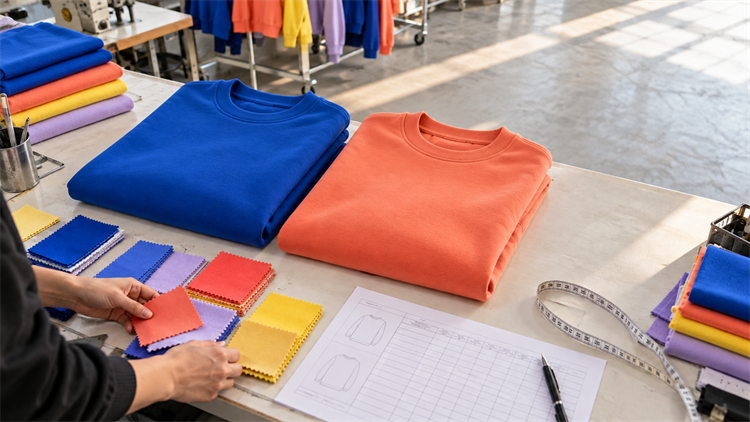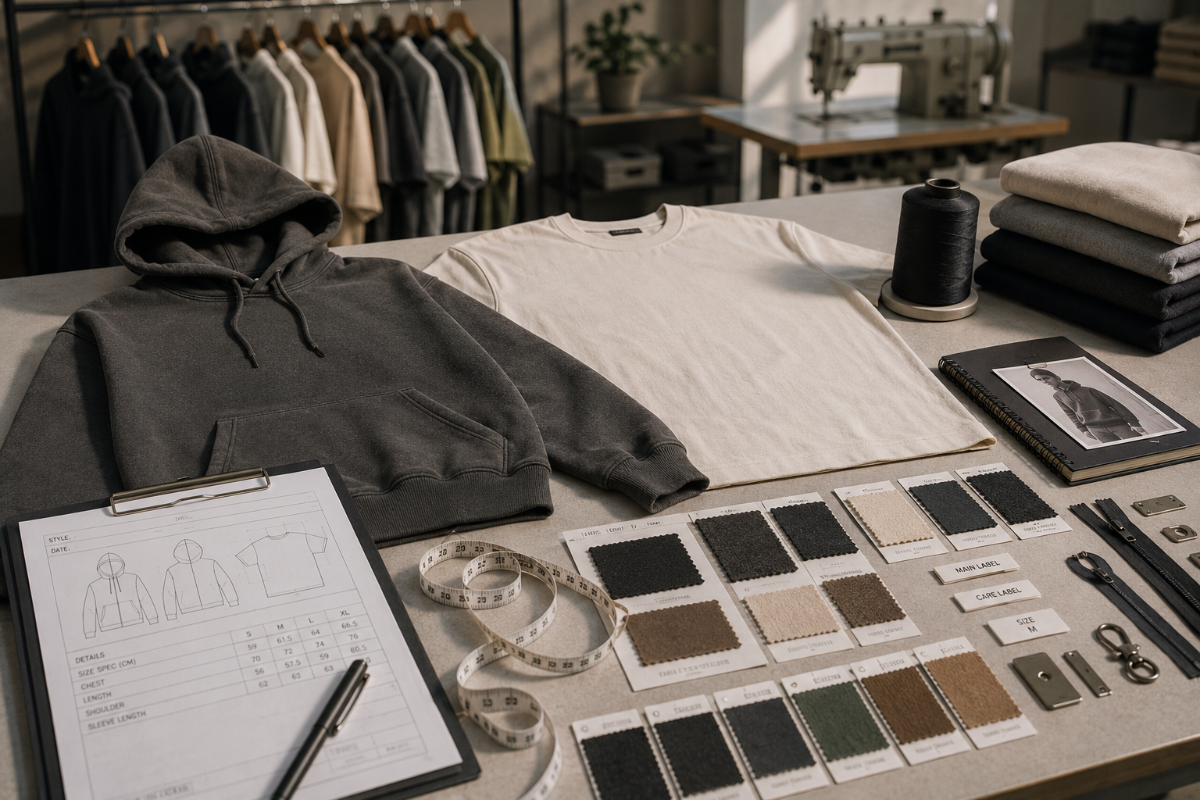
How to Plan a 2,000–5,000-Piece Custom Apparel Order Across Styles and Colors
Written by Aimee Xiang
Founder of Kellogg Fashion
Focused on heavyweight apparel manufacturing, fabric engineering, garment development, quality control, and scalable production.
Introduction
A 3,000-piece apparel order can look straightforward on a purchase order and still become difficult to execute. Too many colorways can divide fabric quantities into inefficient batches. An untested size ratio can leave a wholesaler holding slow-moving stock. One late trim can delay an otherwise finished collection.
For private-label wholesalers, distributors and retailers buying 500–1,000 pieces per style per color, the challenge is making the complete order work commercially and operationally.
To plan a 2,000–5,000-piece custom apparel order, build a style–color–size quantity matrix first. Then confirm material minimums, compare quotations against the same specifications, approve production standards and schedule delivery around your actual stock requirement.
The total quantity alone does not establish MOQ, unit price or lead time.
1. Start With Your Sales Plan Before Dividing the Order
Decide where the garments will be sold, which products already have demand and when stock must be available.
A wholesaler replenishing proven crewnecks has a different risk profile from a buyer introducing an untested hoodie in four new colors. Give stronger quantities to products supported by sales history, retailer commitments or confirmed customer orders. Treat new silhouettes and seasonal shades more cautiously.
Before requesting a quotation, identify:
- Core styles versus new products.
- Sales channels and destination markets.
- Previous sell-through by color and size, where available.
- Target purchase cost and expected selling price.
- Required warehouse arrival date.
- Whether tops and bottoms will sell separately or as fixed sets.
A lower factory price is less useful if the extra quantity is concentrated in colors or sizes your customers do not buy.
2. Build a Style and Color Quantity Matrix
A style–color quantity is the number of garments in one design and one color, distributed across the approved sizes.
For example, 500 black crewnecks and 500 grey crewnecks represent two style–color combinations. They do not represent 1,000 pieces in each color.
Illustrative 3,000-Piece Order
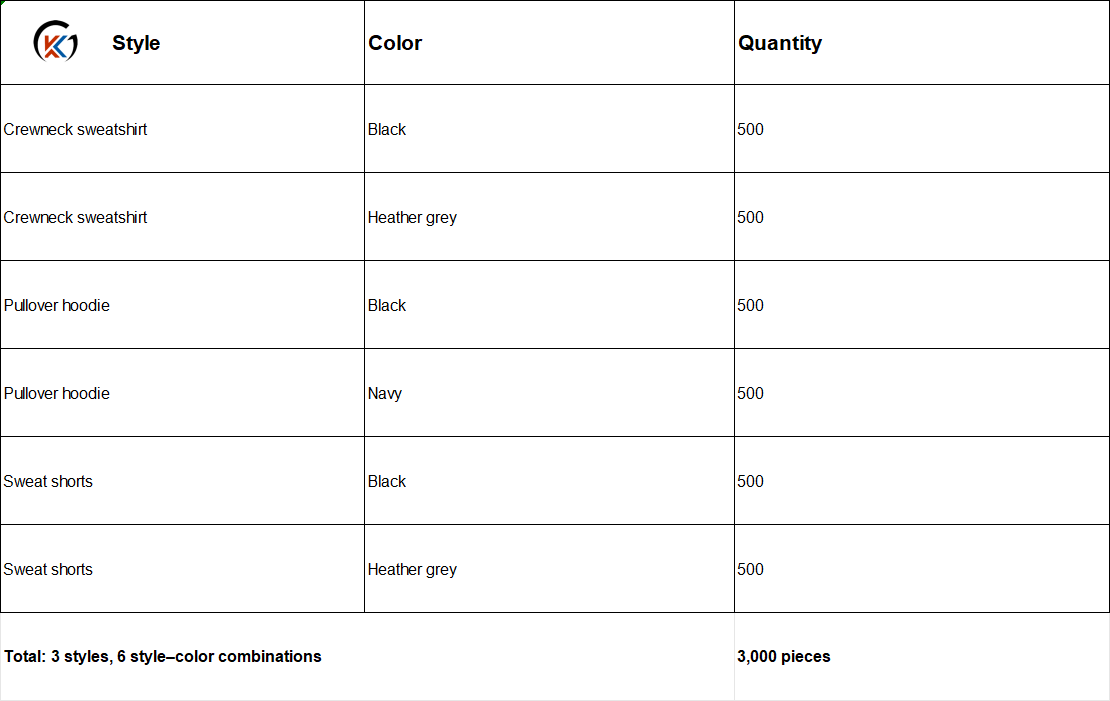
This is a planning example, not a completed production case. Material availability and minimums require project-specific review.
The same total of 3,000 pieces spread across ten styles and three colors would average only 100 pieces per style per color. That creates a very different sourcing and production requirement.
Review the quantity at the smallest production-relevant level, rather than relying on the headline order total.
For coordinated products, state the counting unit explicitly: 500 two-piece sets equal 1,000 individual garments. Confirm whether the quotation, size breakdown and packing instructions use pieces or sets.
Our 300 GSM mock neck sweatshirt with matching shorts provides a product reference for this type of coordinated planning. Define the top and bottom quantities separately, even when they share a retail presentation.
3. Check Fabric and Trim Minimums Before Adding More Colors
A garment order can meet a sewing minimum while remaining difficult to source economically.
Ask the manufacturer to distinguish between:
- Garment MOQ per style and color.
- Fabric minimum per specification and dye color.
- Separate requirements for rib, lining or contrast panels.
- Printing, embroidery or washing batch requirements.
- Minimums for custom labels, hardware and packaging.
Fabric minimums may be quoted in kilograms or meters. The corresponding garment quantity depends on usable width, garment size, construction, consumption and cutting losses.
Can Different Styles Share the Same Fabric?
Potentially, if their composition, construction, finished GSM, color and finishing requirements genuinely align.
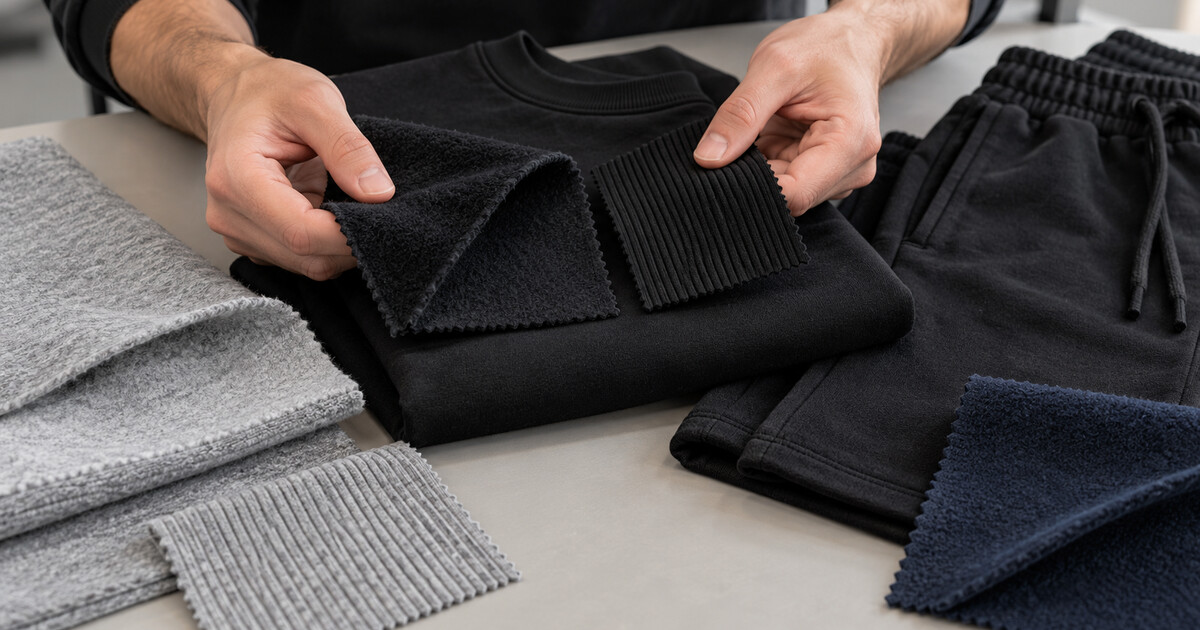
A hoodie and sweat shorts may be candidates for shared main fabric. A T-shirt with a similar color name may require a completely different material. Ribbing still needs its own specification and color review.
Ask whether compatible styles can be planned within the same material purchase, and whether that changes cost or minimums. Shared fabric does not automatically combine the garment MOQ across separate styles.
Request two options when a new color creates an inefficient batch: the specified custom-dyed route and a suitable available-color alternative. Compare the visual result, cost, timing and reorder implications before choosing.
4. Allocate Sizes Using Demand, Not an Equal Split
Five hundred pieces in one color can still create inventory problems if the size distribution is wrong.
Use sales history, pre-orders or retailer requirements to build a separate size curve for each relevant market and fit. A relaxed unisex sweatshirt and a fitted womenswear style should not automatically use the same ratio.
Illustrative Size Breakdown for One 500-Piece Colorway
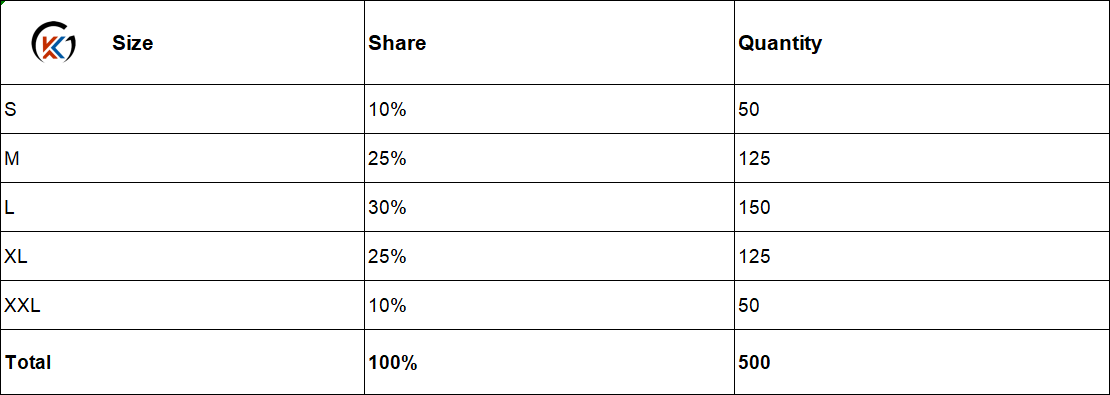
This demonstrates the calculation only; it is not a recommended size curve for every buyer.
For wholesale distribution, confirm whether customers need fixed ratio packs or individually packed garments. For matching sets, confirm whether customers can select different top and bottom sizes. Those decisions affect SKU records, labels and packing.
Approve the size breakdown before cutting, and agree how any permitted production overage or shortage will be handled by style, color and size.
5. Compare Quotations on the Same Production Basis
A quotation for “3,000 custom sweatshirts” leaves too much room for different assumptions.
Give each manufacturer the same quantity matrix and product specification. For documentation, use our guide to preparing a production-ready apparel tech pack.
Check the following before comparing prices:
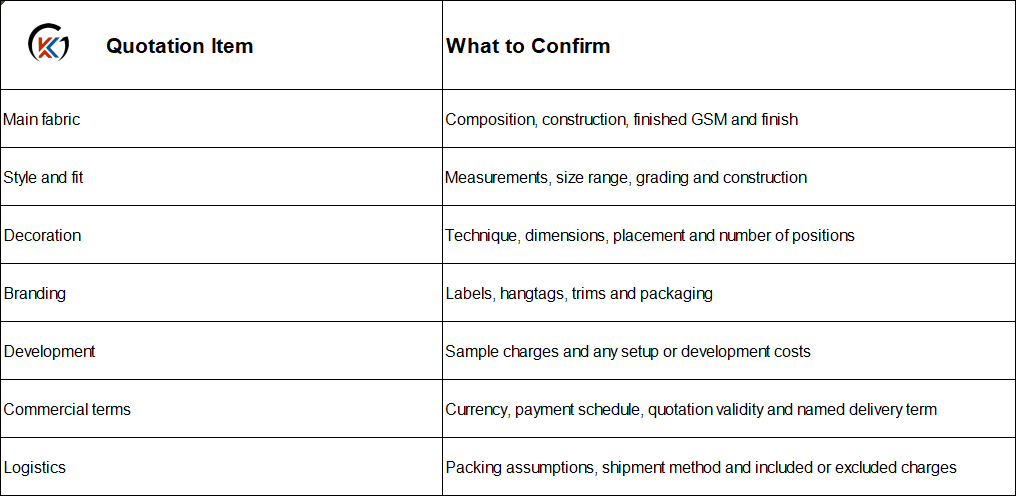
Ask how quantity tiers are calculated: per style, per color, per shared material batch or across the whole order. Do not assume 3,000 mixed garments receive the same rate as 3,000 identical garments.
Compare the full cost of getting saleable stock to your warehouse. Include applicable freight, duties, inspection, handling and development costs alongside the manufacturing quotation.
If a target price cannot support the approved specification, request clearly described alternatives. A different fabric or reduced decoration should be an explicit decision with its effect on the product explained.
6. Approve the Collection Before Repeated Production Begins
One attractive sample does not settle every variable in a multi-style order.
Agree which approvals are needed for each style and color, including:
- Fit, graded measurements and measurement tolerances.
- Bulk fabric specification, hand feel and dimensional stability.
- Color standards for the main fabric and coordinating components.
- Decoration appearance, placement and performance.
- Labels, trims and packaging.
- Pre-production garment approval where required.
For matching tops and bottoms, review the finished garments together under agreed lighting conditions. A color reference alone cannot show how different surfaces and finishes appear side by side. Watch our apparel sample video alongside your review of styles, colors and garment details before confirming production requirements.
The 300 GSM mock neck sweatshirt and shorts production case offers a related reference for coordinated product development. Use the documented product and production details as evidence; the order quantities in this planning guide are separate illustrations.
Record approvals against a dated specification revision. Identify who can authorize changes and require cost or delivery effects to be confirmed before a substitution proceeds.
7. Plan Delivery Backward From Warehouse Arrival
“Ready to ship” and “ready to sell” are different milestones.
If retailers need stock by a particular date, plan backward through transport, clearance, warehouse receiving, inspection, packing, production, material preparation and approvals.
For each style, identify the longest unresolved dependency. It might be custom dyeing, an embroidery approval, a wash trial or a specialist trim.
Ask for a schedule that shows:
- Buyer approval deadlines.
- Material readiness and production start conditions.
- Inspection and packing milestones.
- Expected shipment readiness.
- Transport assumptions and expected arrival window.
Clarify when the quoted bulk lead time starts and what happens if approvals are late. Our guide to custom clothing production delays and how to avoid them explains common scheduling dependencies.
If one style is delayed, discuss whether partial delivery is practical. Check the extra transport cost and whether the early shipment contains the full size range or matching pieces needed for sale.
8. Make Quality and Packing Requirements Order-Specific
Final inspection should verify more than the combined carton count.
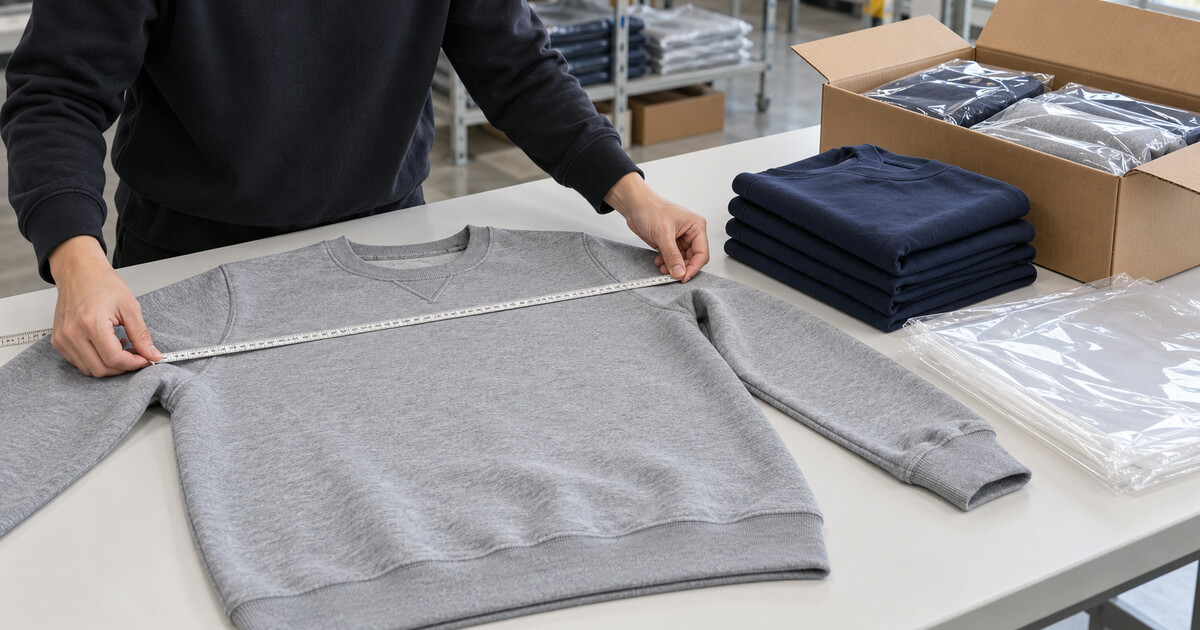
Agree checks for critical measurements, workmanship, shade consistency, decoration and relevant product performance. Define defect criteria, inspection scope and the response if goods fail the agreed requirements.
For mixed orders, verify quantities against the approved matrix:
- Correct style, color and size identification.
- Correct garment and carton labels.
- Accurate ratio packs or individual packing.
- Required matching of tops and bottoms.
- Carton contents that can be reconciled with the packing list.
An order can total 3,000 pieces and still contain the wrong size distribution. Quantity reconciliation protects the buyer from discovering that problem during retailer allocation.
9. Prepare for Reorders During the First Order
For a wholesaler, a successful first delivery is more valuable when proven styles can be replenished consistently.
Retain approved production garments and the final specifications. Record fabric identity, color references, decoration files, measurements and any approved production changes.
Before committing to a repeat delivery date, confirm material availability, new batch approvals, current minimums and production capacity. A repeat order should not assume that the original fabric lot remains available.
Read how to keep best-selling apparel consistent across repeat orders for a more detailed replenishment checklist.
Frequently Asked Questions
Q1. Can a 2,000-piece order include several styles and colors?
A: Yes, subject to the manufacturer’s requirements. Check quantities for each style–color combination and the underlying fabric, trim and decoration minimums. Total order volume alone does not confirm feasibility.
Q2. Does ordering 500–1,000 pieces per style per color guarantee a lower price?
A: No. The quantity may improve production efficiency, but price still depends on fabric, construction, size range, decoration, finishing and packing. Request a quotation for the actual breakdown.
Q3. Can sweatshirts and shorts share one fabric order?
A: They may be able to share main fabric if the approved specifications match and the material supplier can accommodate the combined requirement. Garment minimums and separate component requirements still need confirmation.
Q4. How many colors should a wholesale apparel order include?
A: Choose colors according to demand and sourcing feasibility. Give established sellers priority, then test new shades within a workable production plan. There is no single ideal color count for every 2,000–5,000-piece order.
Q5. What should I send before requesting a production quote?
A: Send your style references or tech packs, quantities by style and color, approximate size breakdown, fabric and decoration requirements, packaging instructions, destination and required arrival date. Identify specifications that remain open for development.
Discuss Your 2,000–5,000-Piece Apparel Order With KELLOGG
KELLOGG is a custom apparel manufacturer based in Humen, Dongguan, China, supporting product development, sampling and bulk production for fashion and private-label businesses.
For sweatshirt-led collections, explore our custom sweatshirt manufacturing services to review fabric, fit and branding development.
Planning 500–1,000 pieces per style per color, with a total order of 2,000–5,000 pieces? Send KELLOGG your style and color quantity plan, together with your references, destination and required arrival date. Identify your core sellers and new products so the review can address sourcing, sampling and production priorities.
Final MOQ, pricing and delivery are confirmed against the actual product specifications and order breakdown.
Share this article