240 GSM vs 280 GSM vs 300 GSM T-Shirts: Which Weight Is Best for Premium Brands?
Written by Aimee Xiang
Founder of Kellogg Fashion
Focused on heavyweight apparel manufacturing, fabric engineering, garment development, quality control, and scalable production.
Introduction
For premium apparel brands, choosing the right T-shirt fabric weight is not simply a matter of selecting the highest GSM available.
A 300 GSM T-shirt is not automatically better than a 240 GSM T-shirt. Fabric composition, yarn quality, knitting density, finishing, garment construction and intended fit all influence how the finished T-shirt looks, feels and performs.
For brands developing premium or heavyweight T-shirts, 240 GSM, 280 GSM and 300 GSM are three commonly considered weight ranges.
Each creates a noticeably different garment.
This guide explains the differences and how to choose the right GSM based on silhouette, season, hand feel and product positioning.
Quick Answer
240 GSM: Best for premium T-shirts requiring better breathability, softer drape and year-round versatility.
280 GSM: Best overall balance of heavyweight feel, structure and commercial wearability for premium oversized T-shirts.
300 GSM: Best for highly structured, boxy heavyweight T-shirts where maximum fabric presence is required.
Manufacturer Recommendation: For most premium oversized T-shirt programs, 280 GSM is a strong starting point, while 240 GSM and 300 GSM suit lighter or more structured product directions respectively.
What Does GSM Mean in T-Shirt Fabric?
GSM stands for grams per square meter and measures the weight of a fabric.
In general:
Higher GSM creates a heavier and more substantial garment. Lower GSM creates a lighter and more flexible garment.
However, GSM alone does not determine fabric quality.
Two 280 GSM cotton fabrics can feel completely different depending on:
- Yarn count and yarn quality
- Cotton type
- Knitting density
- Fabric construction
- Compacting
- Enzyme washing
- Garment washing
- Dyeing method
- Shrinkage control
This is why premium T-shirt development should evaluate fabric weight together with construction and finishing, rather than selecting a fabric based only on a GSM number.
240 GSM T-Shirts: Premium Without Excessive Weight
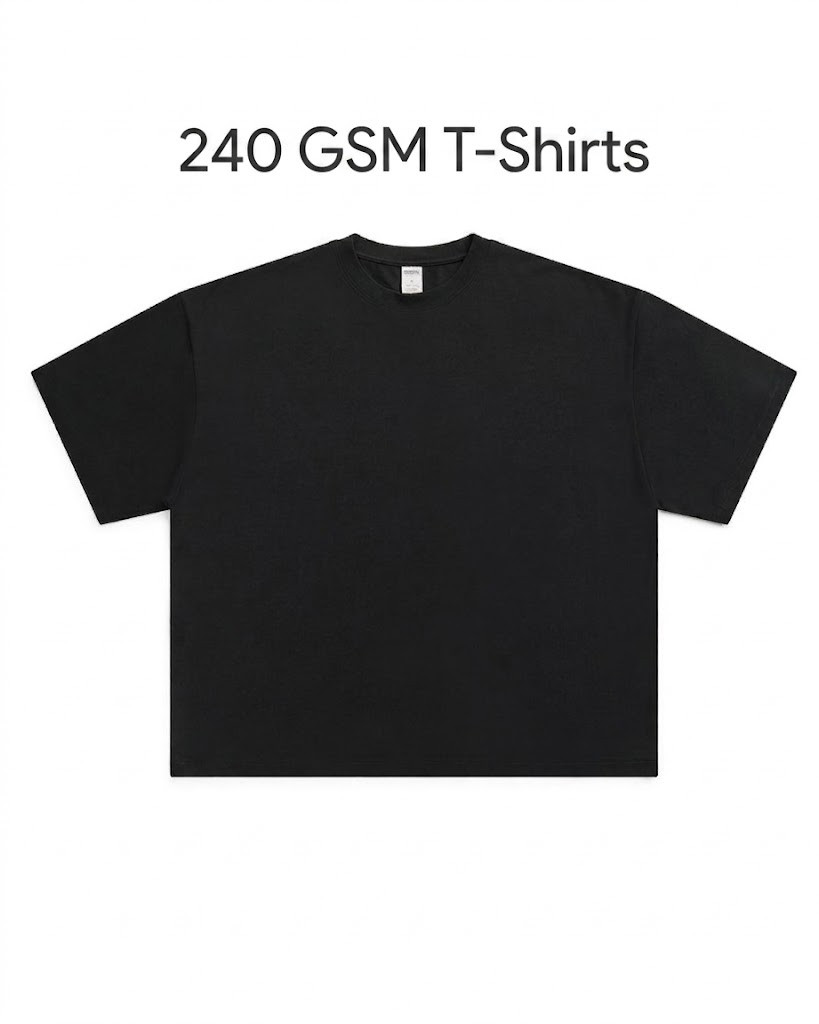
A 240 GSM T-shirt sits at the lighter end of the heavyweight category.
Compared with conventional lightweight T-shirts, 240 GSM fabric already provides noticeably more structure and substance while remaining comfortable for year-round wear.
Key Characteristics
A well-developed 240 GSM T-shirt can provide:
- Substantial but wearable hand feel
- Good breathability
- Clean surface appearance
- Moderate structure
- Comfortable drape
- Easier layering
- Better warm-weather versatility
For brands that want a premium T-shirt without creating an extremely heavy garment, 240 GSM can be an excellent starting point.
Best Applications
240 GSM works particularly well for:
- Premium everyday T-shirts
- Spring and summer collections
- Relaxed-fit T-shirts
- Slightly oversized silhouettes
- Layering pieces
- Lifestyle collections
- Premium basics
The fabric is heavy enough to communicate quality but still flexible enough for customers who do not want an extremely rigid or dense T-shirt.
Potential Limitation
For very exaggerated boxy silhouettes, 240 GSM may not provide the same architectural structure as 280 or 300 GSM fabrics.
Pattern development therefore becomes particularly important.
A poorly proportioned oversized pattern cannot be corrected simply by increasing GSM.
280 GSM T-Shirts: The Best Balance for Many Premium Brands
See how heavyweight cotton, an oversized boxy fit and garment washing work together in this vintage washed heavyweight T-shirt example.
For many premium apparel collections, 280 GSM offers one of the strongest balances between weight, structure and wearability.
It feels clearly heavier than a conventional T-shirt but usually remains comfortable enough for regular wear.
Key Characteristics
A premium 280 GSM T-shirt can offer:
- Dense hand feel
- Stronger garment structure
- Better shape retention
- Cleaner oversized silhouette
- Reduced transparency
- Premium perceived weight
- Good surface for printing and embroidery
- More substantial collar construction
This makes 280 GSM particularly suitable for brands developing heavyweight oversized or boxy T-shirts. For brands developing 240–300 GSM collections for commercial production, working with an experienced heavyweight T-shirt manufacturer helps ensure fabric weight, fit, collar construction, shrinkage and finishing remain consistent from sampling through bulk production.
Best Applications
280 GSM is commonly suitable for:
- Premium heavyweight T-shirts
- Oversized T-shirts
- Boxy-fit T-shirts
- Drop-shoulder silhouettes
- Garment-dyed T-shirts
- Washed collections
- Premium streetwear
- Elevated casualwear
For brands that want customers to immediately notice the weight and quality when they pick up the garment, 280 GSM is often an excellent middle ground.
It provides significantly more presence than a standard T-shirt without necessarily feeling as rigid as a 300 GSM construction.
300 GSM T-Shirts: Maximum Structure and Heavyweight Character
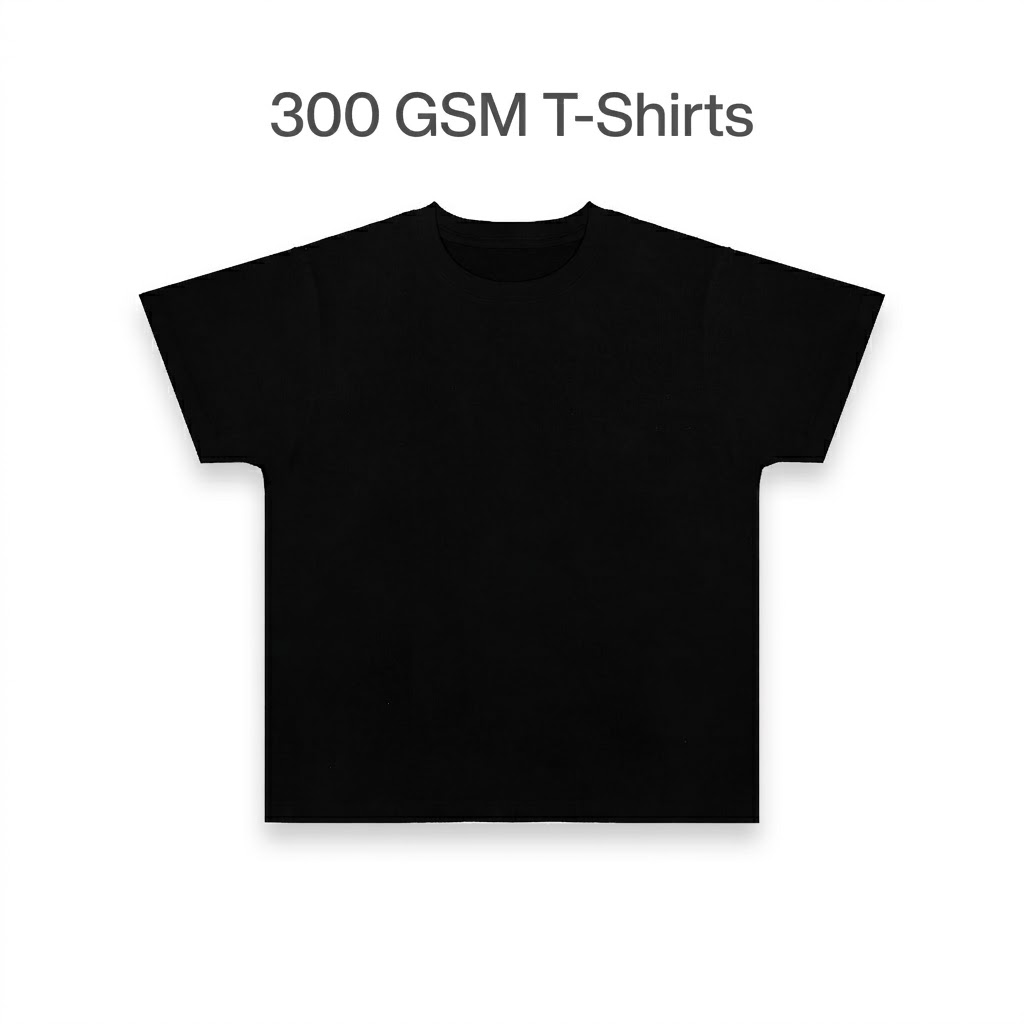
At 300 GSM, a T-shirt begins to behave differently from a conventional jersey garment.
The increased weight and density can create a much more structured silhouette, particularly when combined with compact cotton jersey and a well-developed oversized pattern.
For a practical product reference, explore our 300 GSM custom oversized cotton T-shirt, developed with compact heavyweight jersey, dropped shoulders and a structured oversized silhouette. For a production example, view our 300 GSM 100% cotton oversized T-shirt, developed to combine substantial fabric weight with a structured relaxed silhouette.
Key Characteristics
300 GSM T-shirts typically offer:
- Heavy and substantial hand feel
- Strong structure
- Excellent body and shape
- Premium heavyweight appearance
- Strong boxy silhouette
- Reduced fabric cling
- Good suitability for structured oversized fits
- Strong visual presence
For brands intentionally building a heavyweight identity, 300 GSM can become part of the product's signature.
Best Applications
300 GSM works particularly well for:
- Heavyweight premium collections
- Structured boxy T-shirts
- Oversized silhouettes
- Drop-shoulder designs
- Vintage-washed garments
- Garment-dyed collections
- Statement basics
- Autumn and transitional collections
However, heavier does not always mean better.
A 300 GSM fabric combined with an overly long or poorly balanced pattern can make the garment feel bulky rather than premium.
This is why fabric weight and pattern development must be considered together.
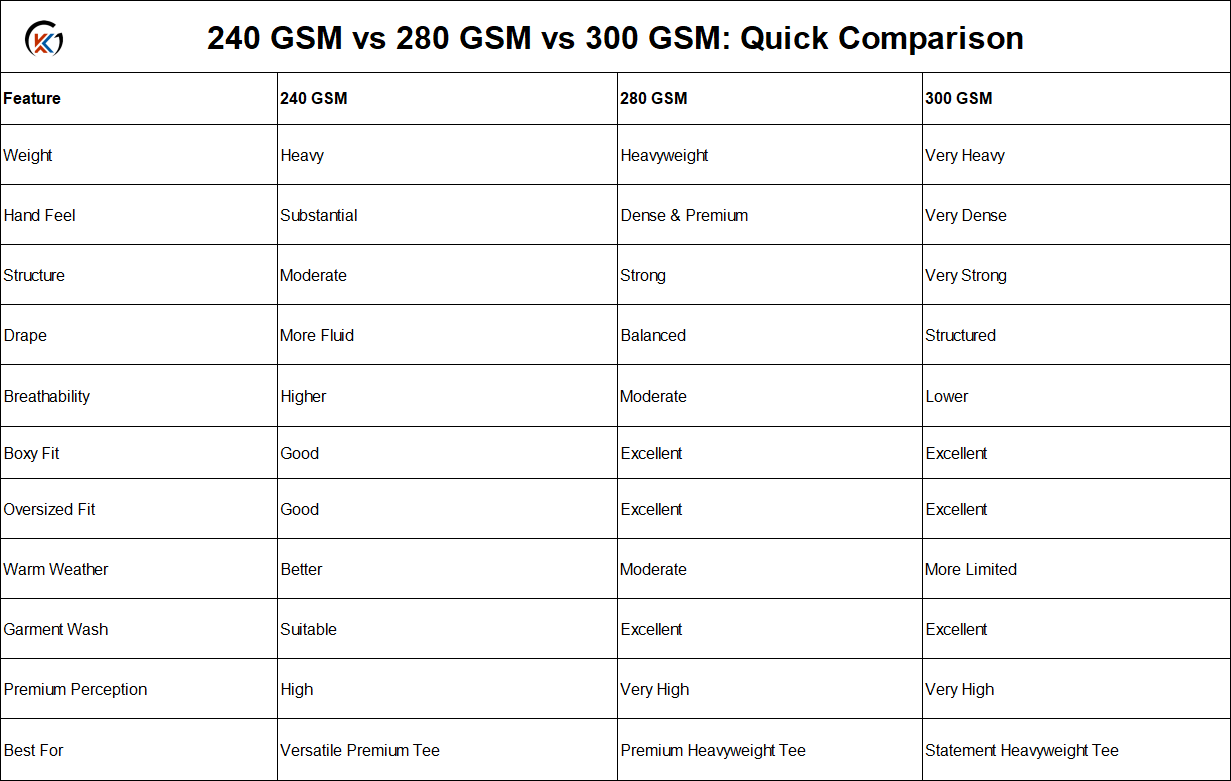 The ideal choice depends on the intended product rather than simply selecting the highest number.
Is 300 GSM Better Than 280 GSM?
Not necessarily.
One of the most common mistakes in heavyweight apparel development is assuming:
Higher GSM = Higher Quality
That is not always true.
A high-quality 280 GSM compact cotton jersey can outperform a poorly developed 300 GSM fabric in:
- Surface smoothness
- Dimensional stability
- Shrinkage
- Pilling resistance
- Hand feel
- Recovery
- Washing performance
For premium brands, the objective should therefore be:
the right GSM + the right yarn + the right knitting construction + the right finishing + the right pattern.
Not simply the heaviest fabric available.
This same principle applies across heavyweight apparel categories.
Fabric Composition Matters as Much as GSM
For premium heavyweight T-shirts, 100% cotton remains one of the most popular choices.
It provides:
- Natural hand feel
- Breathability
- Strong dye absorption
- Premium surface appearance
- Good compatibility with garment dyeing and washing
However, cotton quality and yarn construction matter.
Combed cotton, compact yarn structures and carefully controlled knitting can create a smoother and denser fabric surface than lower-quality cotton at the same GSM.
For brands developing premium T-shirts, fabric evaluation should therefore include more than composition percentages.
Important factors include:
- Yarn quality
- Fabric density
- Surface smoothness
- Stretch and recovery
- Shrinkage
- Twisting
- Colorfastness
- Pilling
- Dimensional stability after washing
How GSM Changes an Oversized T-Shirt Silhouette
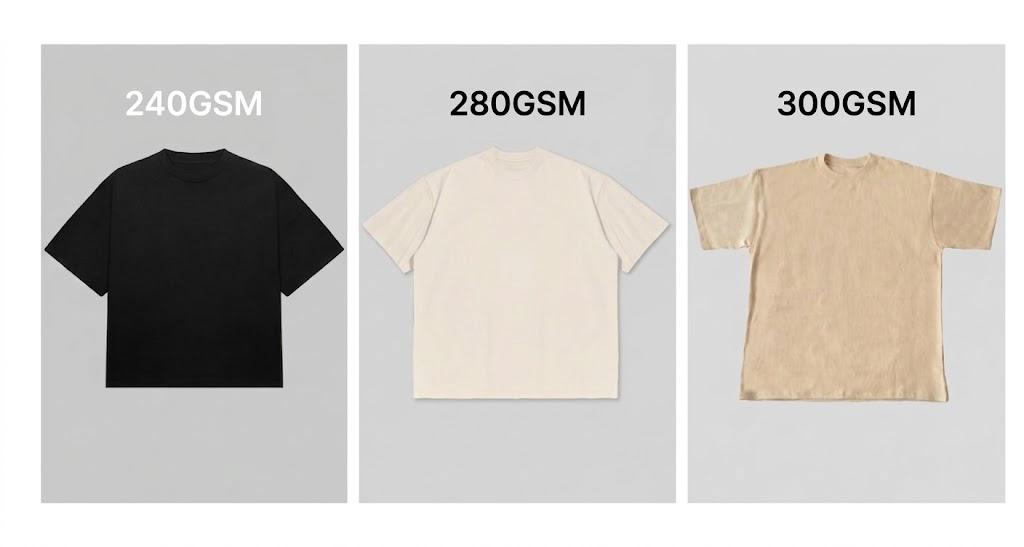
Fabric weight directly affects how an oversized T-shirt behaves on the body.
240 GSM
Provides a softer oversized silhouette with slightly more movement and drape.
It works well when the brand wants an oversized look without making the garment feel extremely heavy.
280 GSM
Creates more structure through the shoulder, sleeve and body.
For many premium oversized T-shirts, this is an effective balance between drape and architecture.
300 GSM
Creates the strongest structure.
When paired with:
- Dropped shoulders
- Wider sleeves
- Shorter body length
- Wider chest
- Structured collar
the garment can develop a pronounced boxy silhouette.
But pattern proportions become increasingly important as fabric weight increases.
Don't Ignore the Collar
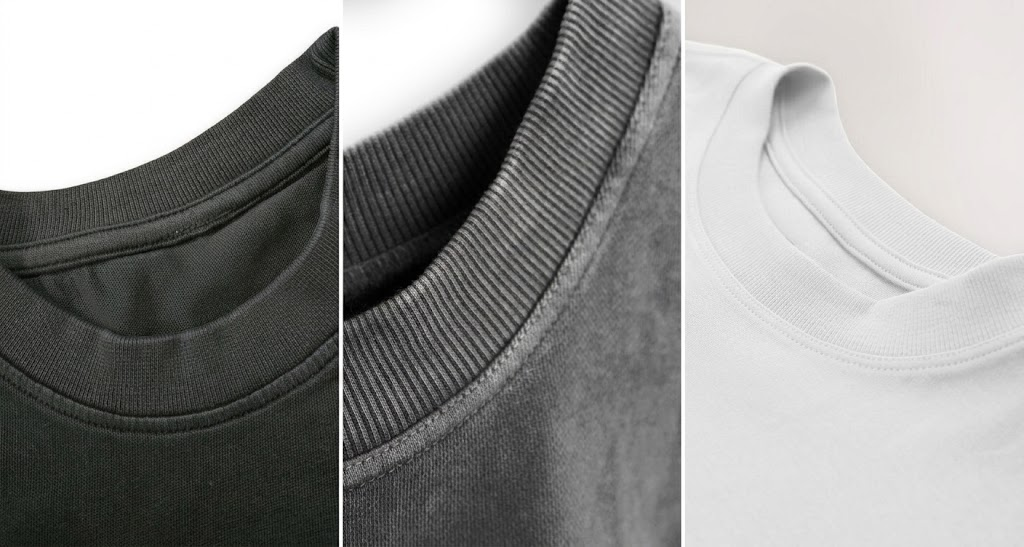
For heavyweight T-shirts, the body fabric receives most of the attention, but collar construction can significantly affect the final appearance.
A 280–300 GSM body fabric paired with a thin or weak rib collar can make an otherwise premium T-shirt feel poorly balanced.
Premium heavyweight T-shirts often benefit from:
- Dense rib construction
- Appropriate rib weight
- Strong recovery
- Clean neckline shape
- Controlled collar height
- Stable stitching
The collar should visually match the weight and structure of the body fabric.
This becomes particularly important for oversized and boxy T-shirts, where the neckline is a major part of the silhouette.
Garment Washing Can Change the Final Result
Fabric weight before production does not tell the entire story.
Garment treatments such as:
- Enzyme washing
- Garment dyeing
- Pigment dyeing
- Vintage washing
- Acid washing
- Softening
can significantly affect the final hand feel, appearance and dimensions of a heavyweight T-shirt.
For example, a compact 280 GSM jersey can develop a softer, more relaxed character after garment washing while still maintaining enough structure for an oversized silhouette.
A 300 GSM fabric can create an even stronger vintage heavyweight appearance when paired with the correct wash. Brands evaluating this direction can review our vintage-washed heavyweight oversized T-shirt as a product example of combining substantial jersey, a relaxed silhouette and a faded surface finish.
However, washing also introduces technical challenges including:
- Shrinkage
- Color variation
- Measurement changes
- Seam puckering
- Twisting
- Surface abrasion
These factors should be considered during sampling rather than after bulk production begins.
Which GSM Is Best for Printing and Embroidery?
All three weights can support customization, but the final result depends on fabric surface, construction and decoration technique.
240 GSM
Suitable for:
- Screen printing
- DTG
- Small embroidery
- Lightweight graphics
280 GSM
Well suited for:
- Screen printing
- Puff printing
- Embroidery
- Appliqué
- High-density graphics
- Premium branded applications
300 GSM
Particularly suitable for designs requiring a substantial garment base, including:
- Heavy embroidery
- Large graphics
- Appliqué
- High-density printing
- Structured branding details
However, decoration should always be tested during sampling.
Heavy embroidery on an incorrectly stabilized jersey can distort the garment regardless of GSM.
Which GSM Should a Premium Brand Choose?
There is no single correct answer.
A useful starting point is:
Choose 240 GSM if:
You want a premium T-shirt that remains relatively breathable, versatile and easy to wear throughout the year.
Choose 280 GSM if:
You want a strong balance of premium weight, structure, oversized fit and commercial wearability.
Choose 300 GSM if:
You want the T-shirt itself to communicate a deliberately heavyweight, structured and substantial identity.
For many premium oversized collections, 280 GSM is a strong starting point, while 300 GSM is better when the design intentionally requires more structure and physical presence.
The final decision should always be validated through fabric swatches and garment sampling.
Why Sampling Matters Before Bulk Production
GSM specifications on paper cannot fully communicate how a finished T-shirt will behave.
During sampling, brands should evaluate:
- Fabric hand feel
- Surface appearance
- Collar structure
- Shoulder position
- Sleeve width
- Body length
- Overall drape
- Shrinkage after washing
- Twisting
- Print or embroidery performance
- Fit after laundering
After the target weight is selected, the next step is confirming that the sample and bulk fabric meet the same specification. Our guide to verifying fabric weight before bulk production explains why target GSM, minimum finished GSM and acceptable tolerance should not be treated as the same requirement.
For this reason, premium T-shirt development should move through fabric selection → pattern development → sampling → fit evaluation → bulk production, rather than jumping directly from a GSM specification into manufacturing.
Our complete guide to premium heavyweight T-shirt development explains how fabric, GSM, fit, construction and sampling are combined before bulk production.
Final Recommendation
For premium apparel brands, the best T-shirt weight depends on the intended customer experience.
240 GSM provides premium substance with greater versatility.
280 GSM offers an excellent balance between heavyweight feel, structure and everyday wearability.
300 GSM delivers maximum presence and a stronger structured silhouette.
But GSM should never be evaluated in isolation.
The best premium heavyweight T-shirts combine:
appropriate GSM + quality cotton + compact construction + controlled shrinkage + strong collar recovery + accurate pattern development + suitable finishing.
That combination ultimately determines whether a heavyweight T-shirt simply feels heavy—or genuinely feels premium.
At Kellogg Fashion, we develop premium heavyweight T-shirts with fabric weight, fit, construction, washing and bulk-production consistency considered together from the sampling stage.
Brands developing 240–320 GSM oversized or heavyweight T-shirts can start with fabric and sample development before moving into scalable production.
Developing 240–320 GSM Premium T-Shirts?
Kellogg Fashion develops heavyweight T-shirts for premium apparel brands, including 240–320 GSM cotton jersey, oversized and boxy pattern development, garment dyeing, washing, custom branding and bulk production.
Development can begin with fabric selection and sampling before moving into scalable production. Once the right T-shirt weight is selected, the next step is finding a manufacturer that can consistently reproduce the required fabric, fit and finishing. See our guide to choosing the right clothing manufacturer
Frequently Asked Questions
Q1. Is 240 GSM considered a heavyweight T-shirt?
A: Yes. A 240 GSM T-shirt is generally considered heavyweight compared with standard lightweight or midweight tees. It provides more structure and a substantial hand feel while remaining relatively breathable and versatile.
Q2. Is 280 GSM good for premium T-shirts?
A: Yes. 280 GSM is an excellent choice for premium T-shirts because it balances weight, structure and wearability. It works particularly well for oversized, boxy and drop-shoulder silhouettes.
Q3. Is 300 GSM too heavy for a T-shirt?
A: Not necessarily. 300 GSM works well for brands intentionally developing structured heavyweight T-shirts. However, it feels warmer and less fluid than lighter fabrics, so climate, season and target customer should be considered.
Q4. Which is better: 240 GSM or 280 GSM?
A: Choose 240 GSM for greater breathability and softer drape. Choose 280 GSM when stronger structure, a denser hand feel and a more pronounced heavyweight appearance are priorities.
Q5. Which is better: 280 GSM or 300 GSM?
A: For many premium collections, 280 GSM provides the better balance between structure and everyday wearability. 300 GSM is more suitable when the design requires maximum weight, body and a highly structured boxy silhouette.
Q6. What GSM is best for an oversized T-shirt?
A: For premium oversized T-shirts, approximately 240–300 GSM is a strong range. The ideal weight depends on the desired drape, body length, shoulder width, sleeve shape and overall silhouette.
Q7. Does higher GSM mean better T-shirt quality?
A: No. GSM measures fabric weight, not overall quality. Cotton quality, yarn, knitting density, shrinkage control, finishing and garment construction can be just as important as fabric weight.
Q8. Is 100% cotton best for heavyweight T-shirts?
A: 100% cotton is popular for premium heavyweight T-shirts because of its natural hand feel, breathability and compatibility with garment dyeing and washing. However, cotton quality, yarn construction and finishing should also be evaluated.
Q9. Does a 300 GSM T-shirt shrink more than a 240 GSM T-shirt?
A: Not necessarily. Shrinkage depends more on fiber composition, knitting construction, fabric stabilization, pre-shrinking and finishing than GSM alone. Proper testing before bulk production is essential.
Q10. Should brands test 240, 280 and 300 GSM before bulk production?
A: For a new heavyweight T-shirt program, comparing fabric swatches or samples is recommended. Brands can evaluate hand feel, structure, fit, collar stability, shrinkage and washing performance before selecting the final fabric for bulk production.
Share this article