The Complete Guide to Heavyweight Fabrics, GSM and Garment Construction
Written by Aimee Xiang
Founder of Kellogg Fashion
Focused on heavyweight apparel manufacturing, fabric engineering, garment development, quality control, and scalable production.
Introduction
Heavyweight apparel is not defined by GSM alone. A successful heavyweight T-shirt, hoodie or sweatshirt depends on how fabric weight, yarn composition, knitting structure, garment pattern, rib construction and finishing work together.
For apparel buyers, the real challenge is not simply finding the heaviest fabric. It is selecting a fabric and construction that deliver the required structure, hand feel, fit and durability—and then reproducing those characteristics consistently during bulk production.
This guide explains the technical decisions that brands should confirm before developing a heavyweight apparel collection.
Written for apparel brands and purchasing teams, this guide explains how heavyweight fabrics should be evaluated as part of finished garment development, sampling and bulk production—not as standalone textile sourcing.
What Is Considered Heavyweight Fabric?
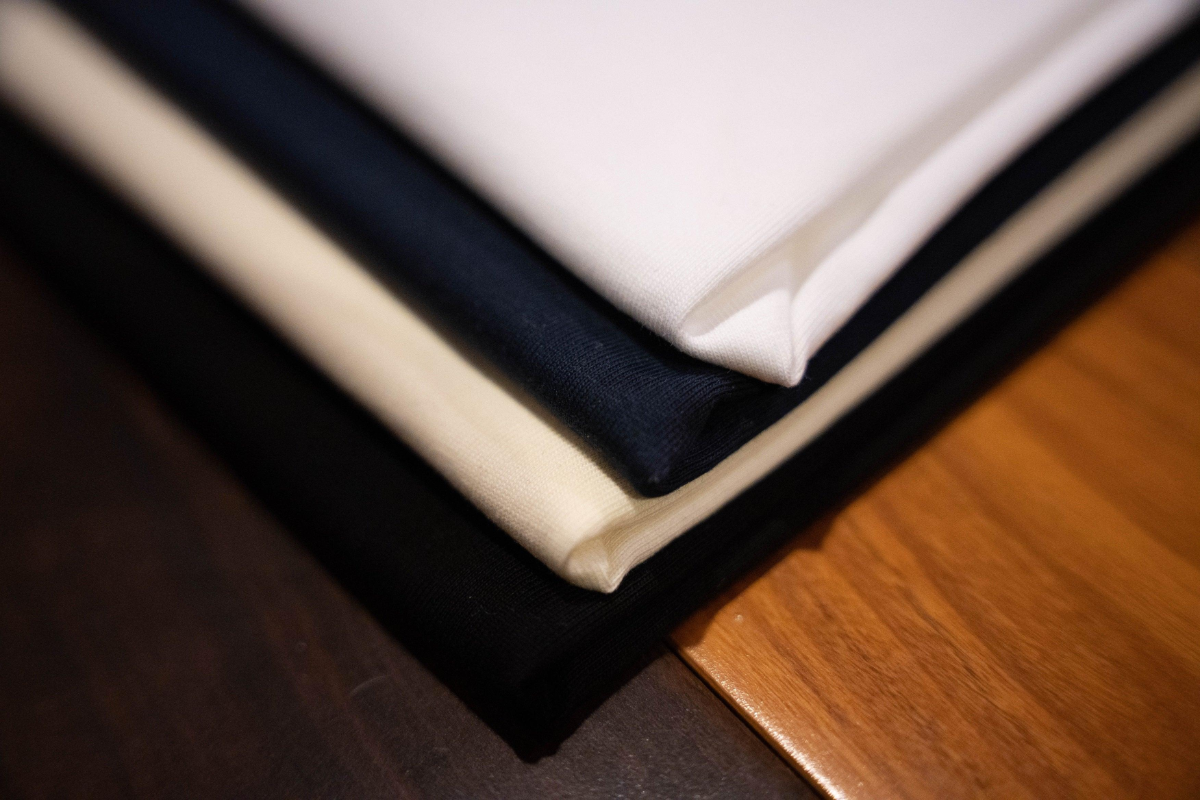
GSM means grams per square metre. It measures fabric weight rather than fabric thickness, quality or finished garment weight.
Two fabrics with the same GSM can perform differently because of differences in yarn count, knitting density, fibre composition, brushing, washing and finishing. GSM is therefore an important specification, but it should never be evaluated by itself.
The following ranges provide a practical starting point:
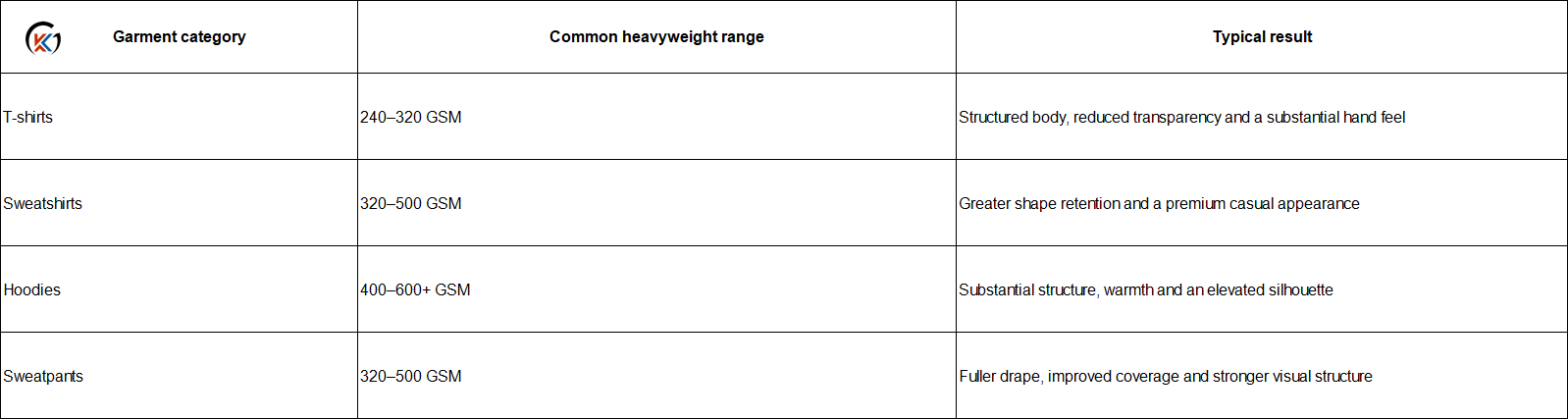
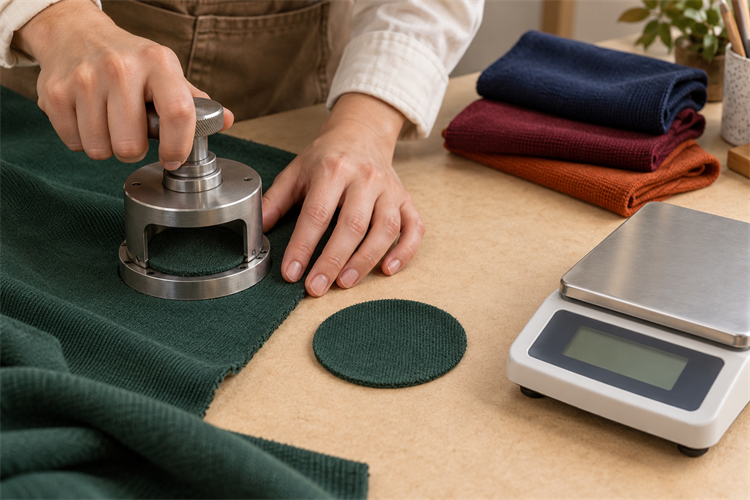
These ranges are not universal rules. A 400 GSM hoodie can feel too rigid or too soft depending on its construction and finishing. The final specification should be chosen according to season, target market, fit, retail positioning and intended use.
Brands comparing available materials can review KELLOGG’s heavyweight fabric and material capabilities for cotton jersey, French Terry, brushed fleece and cotton-rich blends.
GSM Should Match the Garment’s Intended Fit
Fabric weight affects more than warmth. It also changes how the garment hangs, folds and responds to movement.
An oversized T-shirt normally needs enough body to support dropped shoulders and a wide chest without collapsing around the wearer. However, increasing GSM excessively can make the garment stiff, especially when combined with compact knitting or heavy garment washing.
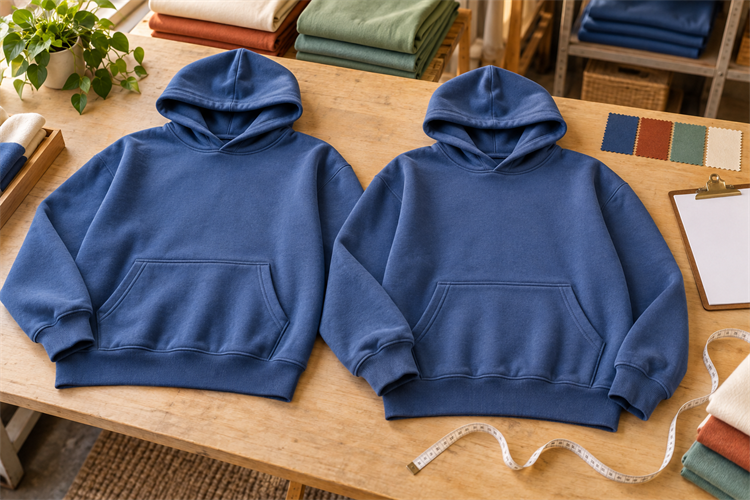
For hoodies and sweatshirts, heavyweight fabric can support a structured hood, wide sleeves and a boxy silhouette. The pattern must still account for fabric thickness at the neckline, armhole, cuff, hem and pocket seams.
A buyer should define the following before approving fabric:
- Target GSM and acceptable tolerance
- Required hand feel: soft, dry, compact or brushed
- Intended fit: regular, relaxed, oversized or boxy
- Required drape and structure
- Season and target climate
- Wash and finishing requirements
- Printing or embroidery method
Selecting GSM before confirming these points often leads to a garment that meets the stated weight but does not match the intended appearance.
Cotton, Cotton-Rich Blends and Polyester Content
Fabric composition influences hand feel, surface appearance, dimensional stability, colour performance and recovery.
100% Cotton
Cotton is commonly selected for its natural hand feel, breathability and premium surface. It works well for heavyweight jersey T-shirts and cotton French Terry garments.
However, cotton fabrics require careful shrinkage and colour management. Yarn quality, knitting tension, dyeing, washing and finishing all affect the final result.
Cotton-Polyester Blends
Cotton-rich blends can improve dimensional stability, recovery and durability while retaining much of the cotton hand feel. They are frequently used for heavyweight fleece hoodies, sweatshirts and sweatpants.
The exact ratio should be chosen according to product objectives rather than using one standard composition for every style. A higher polyester content may improve stability, but it can also change the surface, breathability and perceived value of the garment.
French Terry and Brushed Fleece
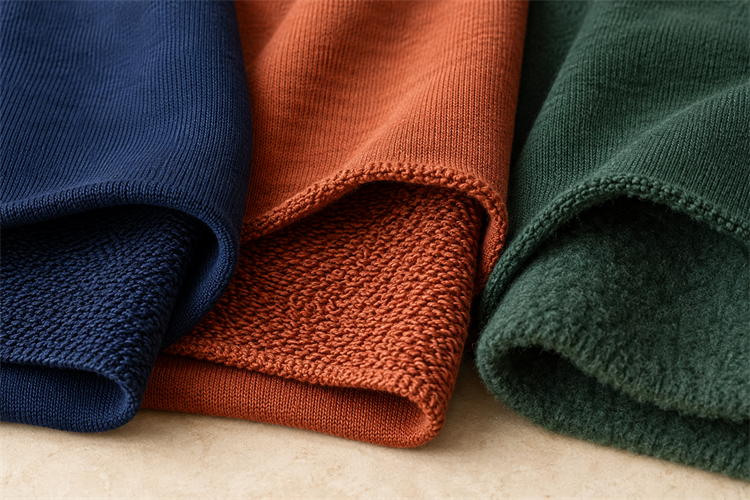
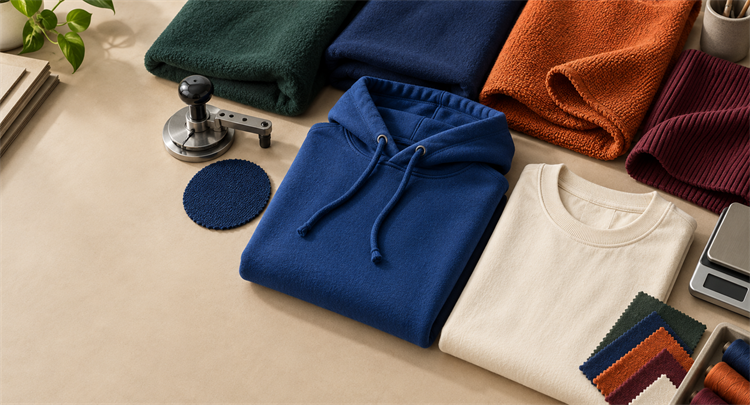
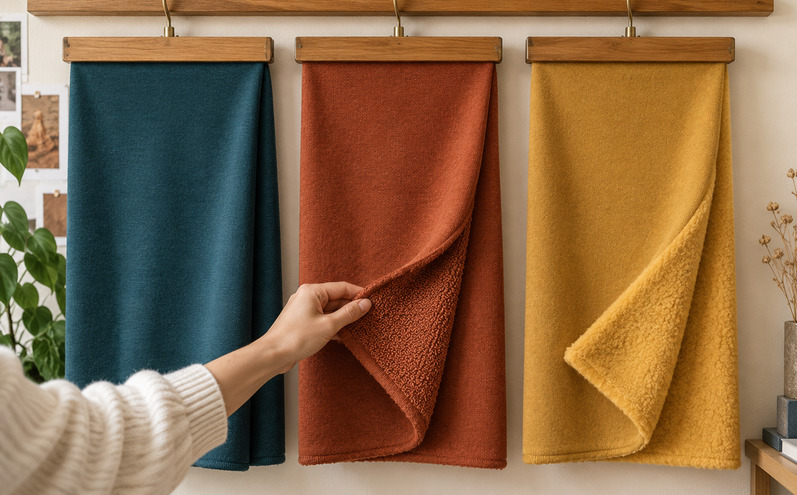
French Terry has visible loops on the inner surface and generally provides better breathability and a cleaner interior. It is suitable for transitional seasons, structured sweatshirts and premium casualwear.
Brushed fleece has a raised inner surface created through brushing. It provides greater softness and insulation, making it suitable for cold-weather hoodies, sweatshirts and sweatpants.
The buyer should confirm whether the quoted GSM refers to the fabric before or after brushing and finishing, because these processes can affect both measured weight and hand feel.
Fabric Construction Matters as Much as Fabric Weight
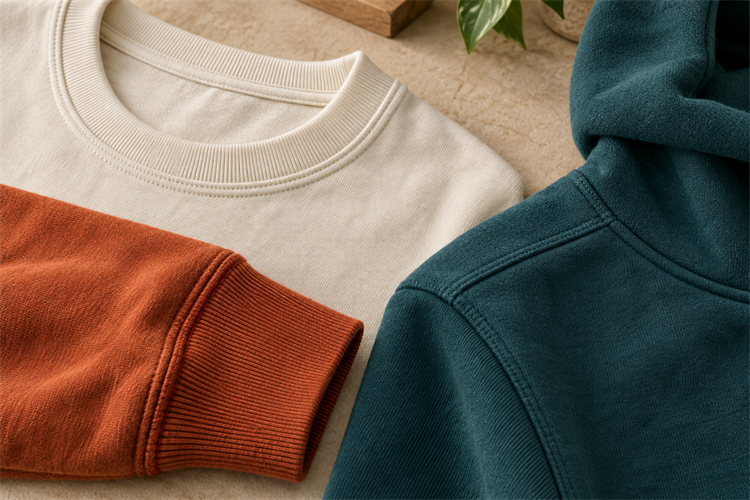
Heavyweight quality is created through a combination of material and construction. Increasing GSM cannot compensate for an unsuitable pattern, weak ribbing or uncontrolled sewing.
Important construction points include:
Necklines and Collars
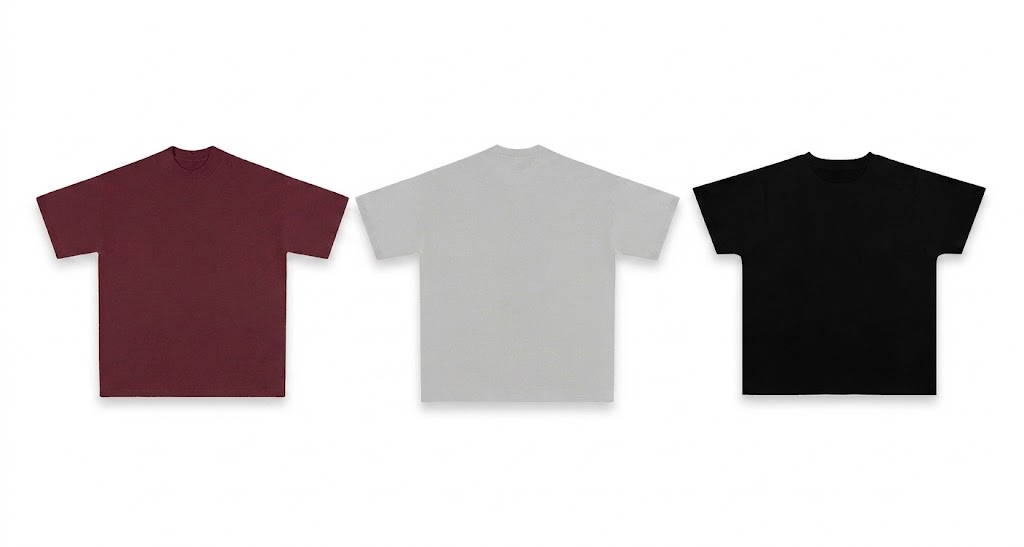
Heavyweight T-shirts require a collar with sufficient recovery and stability. The collar width, rib composition, attachment tension and seam reinforcement should match the weight of the body fabric.
A collar that works on a 180 GSM T-shirt may stretch, roll or lose shape when applied to a 280 GSM oversized T-shirt.
Hoods
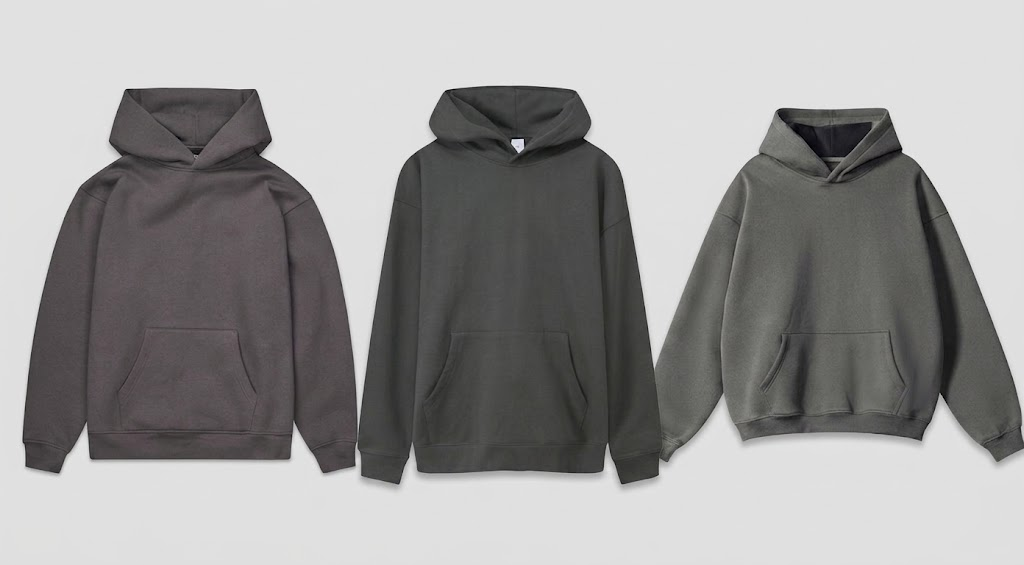
A heavyweight hood must be developed in proportion to the garment body. Fabric weight, hood depth, panel construction, lining and neckline attachment all affect how the hood sits when worn.
Simply using heavier fabric does not automatically create a better hood.
Cuffs, Hems and Waistbands
Rib weight, stretch and recovery should be tested against the main fabric. Ribbing that is too light may lose shape, while excessively tight ribbing can distort the sleeve, hem or waistband.
Seams and High-Stress Areas
Heavy fabrics create additional bulk where several layers meet. Seam allowance, stitch type, needle specification and reinforcement should be adjusted around shoulders, pockets, armholes, waistbands and hood attachments.
For product-specific development, see KELLOGG’s custom heavyweight hoodie manufacturing capabilities.
Shrinkage Is a Production Variable, Not a Marketing Claim
Heavyweight fabric does not automatically mean low shrinkage. Cotton content, knit construction, dyeing, compaction, garment washing and drying conditions all influence dimensional change.
Shrinkage should be evaluated using recorded measurements rather than descriptions such as “pre-shrunk” or “zero shrinkage.”
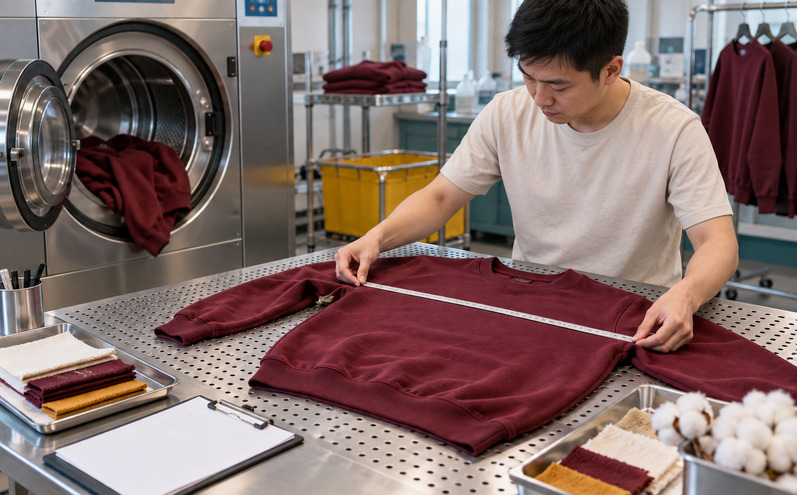
A practical test should include:
- Measuring the fabric or finished garment before washing.
- Washing and drying it under the agreed care conditions.
- Re-measuring the same points after conditioning.
- Recording lengthwise and widthwise dimensional changes.
- Adjusting the pattern or finishing process where necessary.
The shrinkage percentage can be calculated as:
Shrinkage (%) = (measurement before washing − measurement after washing) ÷ measurement before washing × 100
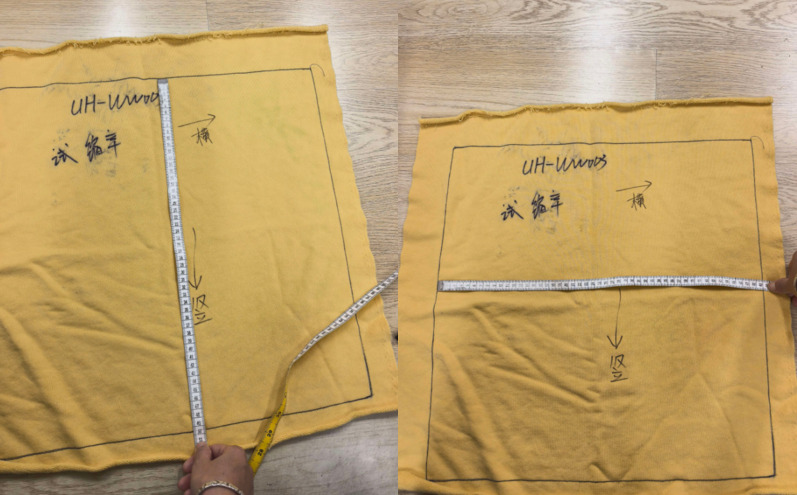
The result must be evaluated together with twisting, surface change, colour variation, rib recovery and overall garment appearance.
Manufacturing Reference:
Decoration Must Be Tested on the Actual Fabric
Heavyweight fabrics can support embroidery, screen printing, puff printing and appliqué, but each technique changes how the garment behaves.
Dense embroidery can pull or distort the fabric if backing, stitch density and placement are not properly controlled. Large prints may affect flexibility and breathability. Puff printing requires suitable artwork, ink application and curing conditions to achieve consistent height and surface definition.
Decoration approval should therefore be completed on the selected production fabric—not on a substitute fabric with a different GSM or composition.
Important approval points include:
- Artwork size and placement
- Print colour and surface coverage
- Embroidery stitch density and backing
- Fabric distortion around the decoration
- Appearance after washing
- Alignment across different garment sizes
KELLOGG’s apparel manufacturing technology and finishing processes provide additional information about printing, embroidery, garment washing and quality control.
What Real Manufacturing Evidence Should Show
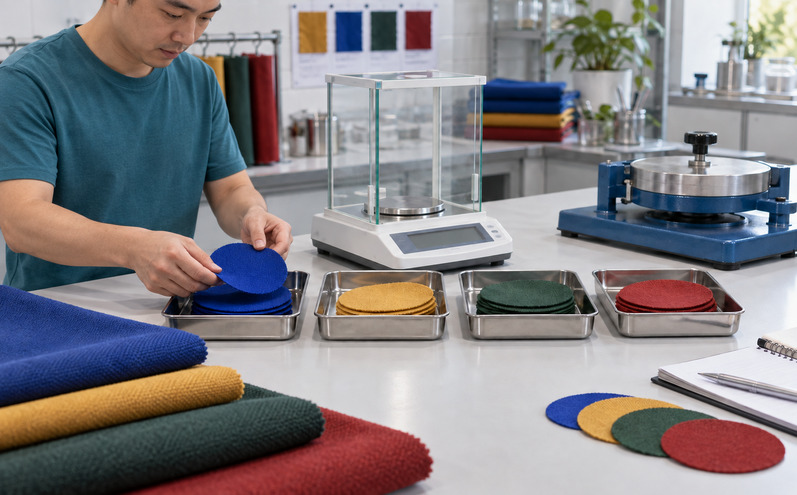
A fabric swatch or attractive sample does not prove that a supplier can reproduce the same result in bulk. Buyers should look for evidence connected to measurable production standards.
Useful evidence includes:
- Fabric roll labels showing composition, colour and lot information
- GSM measurements taken from the proposed fabric
- Wash-test records with before-and-after measurements
- Approved colour or wash references
- Approved decoration samples
- Measurement reports for pre-production and bulk garments
- In-line inspection records
- Sample-to-bulk comparison photographs
Manufacturing Reference:
Manufacturing Reference:
From Development Sample to Bulk Production
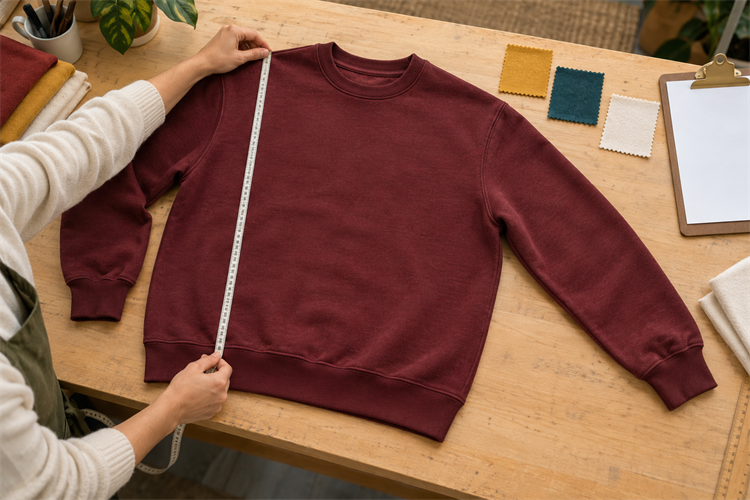
The purpose of sampling is not only to create a visually acceptable garment. Sampling should establish a repeatable production standard.
A complete development process normally covers:
1. Product and Specification Review
The manufacturer reviews the tech pack, reference garment or product brief together with the target GSM, composition, fit, colour, decoration, order quantity and delivery requirements.
2. Fabric and Pattern Development
Fabric options are evaluated for weight, construction, hand feel and performance. The pattern is developed or adjusted to match the intended silhouette and account for fabric behaviour.
3. Sample Testing and Revision
The sample is checked for measurements, fit, workmanship, rib performance, decoration, shrinkage and finished appearance. Necessary corrections are recorded rather than communicated only through informal comments.
4. Pre-Production Approval
The approved garment, measurement specification, fabric, colour, decoration, labels, trims, wash reference and packing requirements become the production standard.
5. Bulk Production and Quality Control
Bulk fabric, cutting, sewing, decoration, finishing and measurements are checked against the approved specifications. Variations should be identified during production instead of being left until final inspection.
Manufacturing Reference:
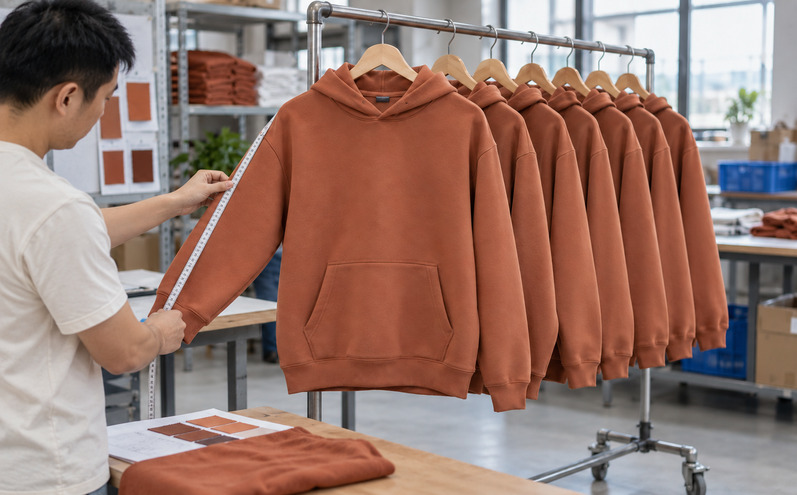
Brands preparing a heavyweight collection can review KELLOGG’s apparel sampling and product development process for support from specification review through pre-production approval.
Questions Buyers Should Ask Before Placing an Order
Before confirming a heavyweight apparel supplier, buyers should ask:
- Is GSM measured before or after dyeing, brushing and finishing?
- What is the confirmed fabric composition and knit construction?
- Has shrinkage been tested using the intended care method?
- Is the rib specification matched to the main fabric?
- Will decoration be tested on the production fabric?
- Which sample becomes the approved bulk reference?
- How are fabric lots, measurements and workmanship controlled?
- How are approved standards maintained for repeat orders?
- Are MOQ, sampling time and bulk lead time confirmed for this specific project?
Clear answers reduce the risk of approving one good sample but receiving inconsistent bulk garments.
Choosing the Right Heavyweight Apparel Specification
There is no single GSM or fabric composition that is best for every brand.
A premium heavyweight product is created by aligning five elements:
- Fabric weight and construction
- Fibre composition and finishing
- Pattern and intended silhouette
- Garment construction and decoration
- Measurable sample and bulk-production standards
Brands should begin with the intended product experience—not simply the highest available GSM. The correct specification is the one that produces the required structure, comfort, appearance and repeatability at commercial scale.
For brands that already have a defined product direction, KELLOGG provides premium heavyweight apparel manufacturing covering fabric selection, fit development, sampling, finishing and scalable bulk production.
Developing a heavyweight T-shirt, hoodie, sweatshirt or sweatpants collection? KELLOGG supports apparel brands with fabric evaluation, pattern development, sampling and controlled bulk production. Submit your tech pack, reference garment, target GSM and planned order quantity for project review.
Frequently Asked Questions
Q1, Is 400 GSM considered heavyweight?
A: Yes. For hoodies and sweatshirts, 400 GSM is generally considered heavyweight. The final hand feel and structure still depend on composition, knitting, brushing and finishing.
Q2, Is a higher GSM always better?
A: No. Higher GSM increases fabric weight but does not automatically improve yarn quality, softness, recovery, shrinkage or garment construction. The appropriate GSM should match the intended product.
Q3, What GSM is suitable for a heavyweight T-shirt?
A: Approximately 240–320 GSM is a practical range for structured heavyweight T-shirts. Fit, climate, yarn quality and finishing should also be considered.
Q4, Which is better for heavyweight hoodies: French Terry or brushed fleece?
A: French Terry generally provides better breathability and a cleaner looped interior. Brushed fleece provides greater softness and warmth. The correct choice depends on season, market and intended hand feel.
Q5, How can buyers control sample-to-bulk consistency?
A: Confirm the approved sample, fabric specification, measurements, colour, decoration, wash reference and workmanship standards before production. These standards should then be checked during fabric inspection, cutting, sewing, finishing and final inspection.
Share this article