How to Keep Best-Selling Apparel Consistent Across Repeat Orders
Introduction
Your best-selling hoodie sells out. You place another order with the same manufacturer, using the same style number, color name and size breakdown.
When the shipment arrives, something has changed.
The fabric feels lighter. The neckline sits differently. The black has a warmer tone. Customers who reorder their usual size say the new version fits smaller.
For a purchasing team, this creates a difficult situation: the order may have arrived on time, but the product no longer delivers the experience that made it successful.
Repeat-order consistency protects more than garment quality. It protects customer trust, inventory value and the ability to replenish a proven product without starting development again.
For established fashion, streetwear and private-label brands, the practical challenge is keeping the approved product standard intact as materials, production batches and manufacturing conditions change.
To keep best-selling apparel consistent across repeat orders, brands should retain an approved bulk garment, maintain a version-controlled specification, verify new fabric and color batches, and approve substitutions before production. Early checks should confirm that the new batch preserves the fit, feel and finish customers already recognize.
1. Why a Successful First Order Does Not Guarantee a Consistent Reorder
A repeat order may use a new fabric lot, a different dye batch or a new delivery of rib, zippers and labels. Production may take place months later, with different operators or finishing conditions.
The purchase order can remain unchanged while the manufacturing inputs move.
This is why “same as last order” is an incomplete production instruction.
The manufacturer needs a traceable reference for what must remain consistent, what variation is acceptable and which changes require the brand’s approval.
The distinction matters commercially. A new customer evaluates the garment in front of them. A returning customer compares it with the product they already own.
That returning customer may notice a change that a routine visual inspection misses.
2. Keep a Physical Reference From the Successful Production Batch
An early development sample shows what the brand originally intended to produce. A retained garment from the successful bulk order shows what customers actually received.
For repeat production, both can be useful.
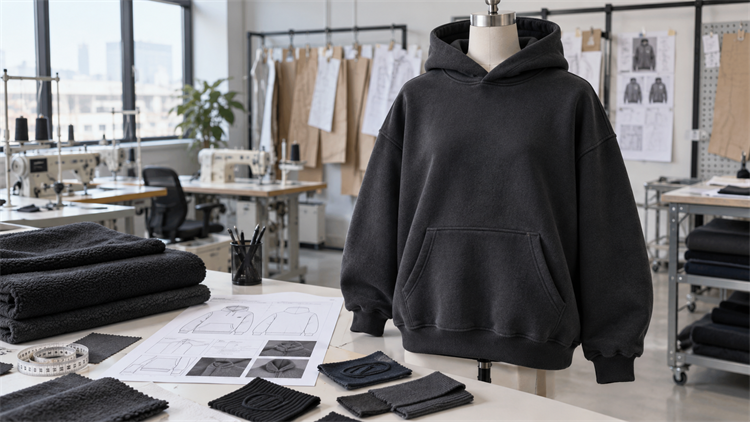
Before the original order is fully distributed, brands should retain representative garments from the approved batch. Label them with the style code, color, size, order reference and production date.
Where practical, the brand and manufacturer should each hold matching references.
Keep an unworn, unwashed reference for production comparison, and a separately identified wash-tested reference for evaluating performance. A garment that has been worn and repeatedly laundered should not become the only standard for a new order.
The reference package should include:
- The approved bulk garment.
- The final measurement specification and grading.
- Approved fabric, rib and trim references.
- Color and decoration approvals.
- Recorded wash-test results.
- Final production comments incorporated into the specification.
Our guide to preparing a production-ready apparel tech pack explains how to organize the technical information behind that physical reference.
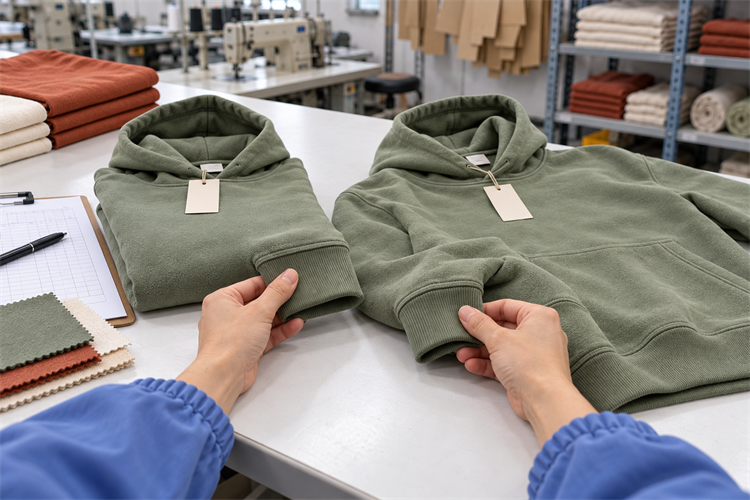
3. Control Fabric Identity Beyond the GSM Number
One of the most frustrating reorder problems is receiving fabric that meets the stated weight but feels like a different product.
A hoodie can still be described as “450 GSM cotton fleece” while its firmness, surface texture, drape or brushed interior has changed.
For a premium brand, those differences can affect the entire product identity.
A repeat-order fabric specification should therefore go beyond composition and nominal GSM. Depending on the product, it should identify the approved fabric article, knitting construction, yarn details, finishing requirements and relevant performance criteria.
Before cutting, ask the manufacturer to compare the new bulk fabric with the retained reference.
The review should answer practical questions:
- Does it have the same structure and drape?
- Is the surface appearance consistent?
- Does the reverse side feel comparable?
- Are weight and dimensional stability within the agreed limits?
- Will the finished garment behave similarly after washing?
Our guide to heavyweight fabrics, GSM and garment construction provides additional context for evaluating fabric as part of the complete garment.
If the original fabric is unavailable, an alternative should be submitted for approval before production proceeds. A replacement with the same composition and GSM still needs evaluation.
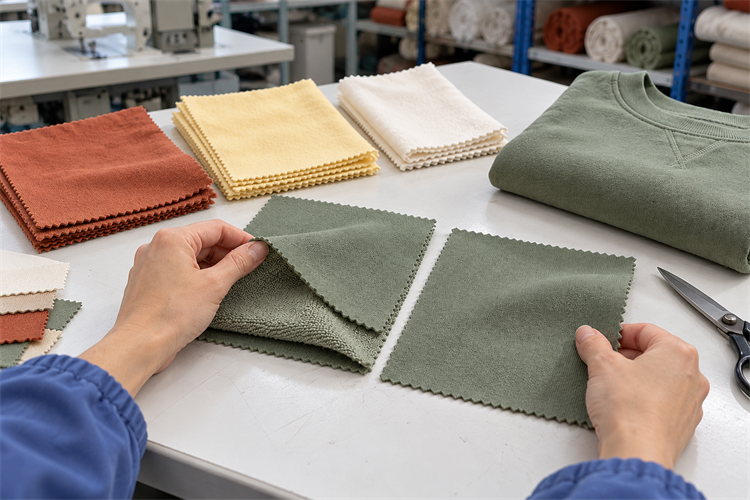
4. Treat Color Matching as a Reorder Approval
“Black,” “cream” or “washed charcoal” is a color name, not a complete approval standard.
A shade difference can become particularly visible when new stock is sold alongside remaining inventory. It can also create problems when a customer buys sweatpants to match a hoodie purchased earlier.
For repeat orders, establish which physical reference governs color approval. Review the new production material against that reference under agreed lighting conditions.
For solid shades, a new dye lot may require a fresh material approval. For garment-dyed or washed products, approval should consider the finished result.
Brands should also clarify:
- Whether old and new stock will be sold together.
- Whether garments need to coordinate across separate orders.
- Which shade differences are acceptable.
- How fabric lots will be identified and separated.
- What happens if the new batch falls outside the approved range.
Vintage and washed finishes need particular care. Some variation may be intentional, but the acceptable range should still be agreed. Reference samples showing acceptable lighter and darker results can be more useful than a single photograph.
See our garment washing guide for background on finishes that affect shade and surface character.
5. Protect the Fit Customers Already Know
A returning customer expects their usual size to fit as expected.
If the second batch has a shorter body, narrower chest or tighter neckline, the brand may face returns even though the size label has not changed.
Start by confirming that the repeat order uses the correct pattern and grading revision. Then evaluate the new fabric’s behavior before assuming the previous production settings remain suitable.
The same pattern can produce a different finished fit when fabric relaxation, shrinkage or finishing changes.
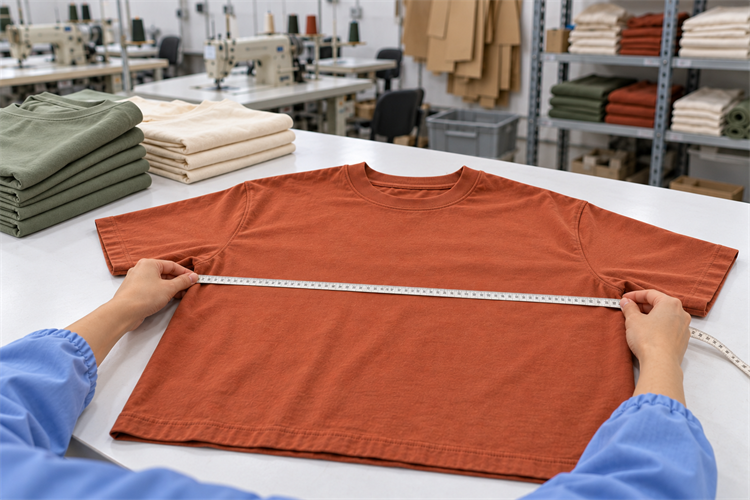
For a heavyweight hoodie, critical checkpoints might include body length, chest width, shoulder position, hood shape and rib tension. For an oversized T-shirt, neckline shape, sleeve opening and the balance between width and length may be especially important.
The specification should state:
- How each measurement is taken.
- Whether it applies before or after garment finishing.
- The tolerance for each measurement point.
- The agreed laundering conditions for wash testing.
A reorder approval should address the complete silhouette as well as individual measurements. Several small differences can combine to make a garment feel noticeably different.
6. Make Material and Process Changes Visible Before They Become Inventory
Purchasing teams cannot manage changes they learn about after shipment.
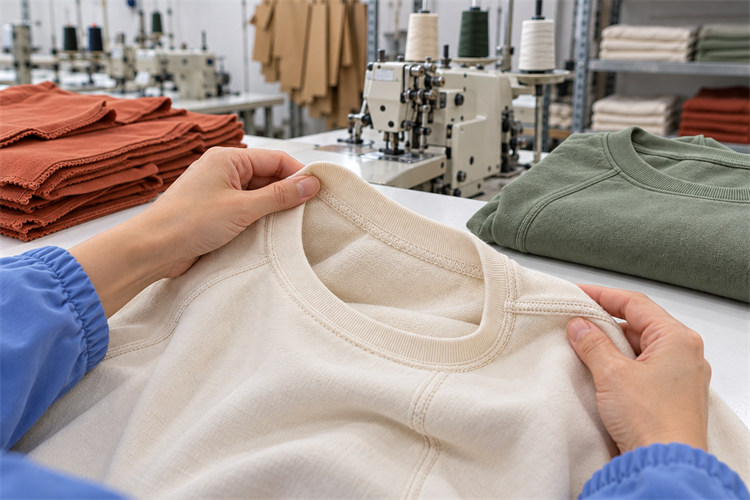
An alternative rib may pull the hem inward. A replacement zipper may change the front drape. A different embroidery backing may make the chest feel stiffer.
Each substitution may appear minor in isolation, yet affect the finished product.
Agree on a written change-approval process before placing repeat orders. It should cover changes that could affect appearance, fit, performance or the approved specification.
For a proposed substitution, request:
- What is changing and why.
- A comparison with the original material or process.
- The expected effect on the garment.
- A sample or test result where needed.
- Any impact on price or delivery.
Approval should be recorded against the relevant order and specification revision. A verbal discussion should not leave production teams uncertain about which version to follow.
7. Verify the New Batch Before Full Production Advances
A repeat order should reuse approved development work while still checking the variables that have changed.
The appropriate approval level depends on the product and the reorder conditions. An unchanged style using verified materials may need fewer checks than a washed garment made from a new fabric source.
Ask the manufacturer to identify which approvals are needed for the new batch. These may include a bulk fabric review, shade approval, decoration strike-off, wash trial or pre-production garment.
Check the first production output early enough to correct a repeated problem.
For example, discovering that the neckline is too tight after the first few garments allows a different response from discovering it after the entire order has been packed.
Our article on quality control during bulk apparel production explains the role of checks at different manufacturing stages.
8. Plan Replenishment Before Stock Pressure Forces Compromises
A stockout creates pressure to accept the nearest available fabric, shorten approval time or ship before a concern is resolved.
That pressure is easier to manage when repeat-order planning starts before inventory becomes critical.
Share your expected reorder window, likely quantities and color priorities with the manufacturer. Confirm current material availability and production timing for each order rather than assuming the first order’s schedule still applies.
Where demand supports it, discuss whether reserving fabric or trims is practical. Agree on quantities, ownership, payment, storage and how long materials will be held.
Reserved materials can reduce some sourcing uncertainty, but they do not remove the need to check condition and suitability before use.
Build the schedule around material readiness, necessary approvals, production, inspection and transport. Our guide to custom clothing production delays and how to avoid them explores decisions that can disrupt that sequence.
9. Keep Batch Records Useful to the Purchasing Team
When a customer reports that “the new version is different,” the brand needs to identify which stock is affected.
Link each production batch to its material records, approved revisions, inspection results and shipment information. Where practical, keep warehouse stock identifiable by batch.
This helps the team investigate a complaint, compare retained garments and decide whether the issue is isolated or repeated.
It also gives the next reorder a better starting point. Customer feedback about shrinkage, fit or decoration should become a documented review item rather than disappear into an email thread.
If the brand intentionally improves the product, record the change as a new revision. Otherwise, a manufacturer may reproduce an older version on the following order.
A Practical Checklist Before Your Next Reorder
Before authorizing production, confirm:
- Reference: Which approved garment and specification govern this order?
- Fabric: Has the new material been compared with the previous batch?
- Color: Has the current shade or wash range been approved?
- Fit: Are the pattern, grading and finished measurements correct?
- Changes: Have substitutions and process adjustments been disclosed?
- Checks: What must be approved before cutting and during production?
- Timing: Are materials, approvals and inspection included in the schedule?
- Traceability: Can the new batch be identified after delivery?
These questions make the purchasing decision more specific than asking whether the factory can “make it the same.”
Planning a Repeat Apparel Order With KELLOGG
KELLOGG provides custom apparel development, sampling and bulk production for fashion, lifestyle and private-label brands.
For brands with existing products, a useful starting point is the garment itself, supported by the latest specifications and a clear explanation of what must remain consistent.
When discussing your next production order, share:
- Your existing garment or approved reference sample.
- The latest tech pack and size specification.
- Details of any quality or fit problems from previous batches.
- Planned quantities for each style and color.
- Your target delivery window.
KELLOGG’s minimum order quantity is 200 pieces per style, per color.
If a product needs redevelopment, sample completion comes before final production pricing so that the actual materials, construction and processing requirements can be assessed.
Your best-selling product has already earned customer demand. A well-controlled reorder process helps protect the fabric, fit and finish those customers expect when they buy it again.
Frequently Asked Questions About Repeat Apparel Orders
Q1. Why can a repeat apparel order differ from the original batch?
A: Repeat orders may use new fabric lots, dye batches, trims or finishing conditions. Even when the style number and specifications remain unchanged, these inputs can affect the finished garment. Comparing new materials and early production output with retained references helps identify differences before the full order is completed.
Q2. What should brands provide when placing a repeat clothing order?
A: Provide a retained garment from the approved production batch, the latest tech pack, measurement specifications, color references and previous approval records. Include the new quantities by style, color and size, your delivery requirements, and any customer feedback that needs attention. Clearly identify whether the order is an exact repeat or an updated product revision.
Q3. Does using the same fabric GSM guarantee the same garment quality?
A: No. GSM measures fabric weight per unit area. Fabrics with the same GSM can differ in yarn, knitting structure, density, finishing, softness and shrinkage. Repeat-order approval should compare the new fabric’s construction, appearance, hand feel and performance with the approved reference, alongside its weight.
Q4. Do brands need a new sample for every repeat order?
A: The required approval depends on what has changed. An unchanged product using verified materials may need fewer checks than an order involving a new fabric source, revised fit or different wash process. Agree with the manufacturer whether fabric approval, a decoration test, a wash trial or a new pre-production sample is needed before authorizing production.
Q5. How can brands reduce color differences between production batches?
A: Keep an approved physical color reference and assess new material or finished garments under agreed lighting conditions. Confirm acceptable shade variation before production. For garment-dyed or washed apparel, review the finished effect. If new stock must coordinate with previous inventory, communicate that requirement before dyeing or finishing begins.
Q6. Why can the same size fit differently on a repeat order?
A: Fit can change because of pattern revisions, cutting or sewing variation, fabric relaxation, shrinkage and finishing. Even an unchanged pattern can produce different finished measurements when the fabric behaves differently. Confirm the correct pattern version, measurement method, tolerances and wash-test conditions for the new batch.
Q7. What should happen if the original fabric or trims are unavailable?
A: The manufacturer should disclose the proposed replacement before using it. The brand should review how it affects appearance, fit, performance, price and delivery. Depending on the change, a material comparison, test or revised sample may be needed. Record approval against the relevant order and update the specification where necessary.
Q8. How can brands plan repeat orders without compromising quality?
A: Start planning while sufficient stock remains to allow material sourcing, approvals, production and inspection. Share expected quantities and reorder timing with the manufacturer, then verify current material availability. If reserving fabric or trims is practical, agree on quantities, payment, ownership and storage conditions before committing.
Share this article